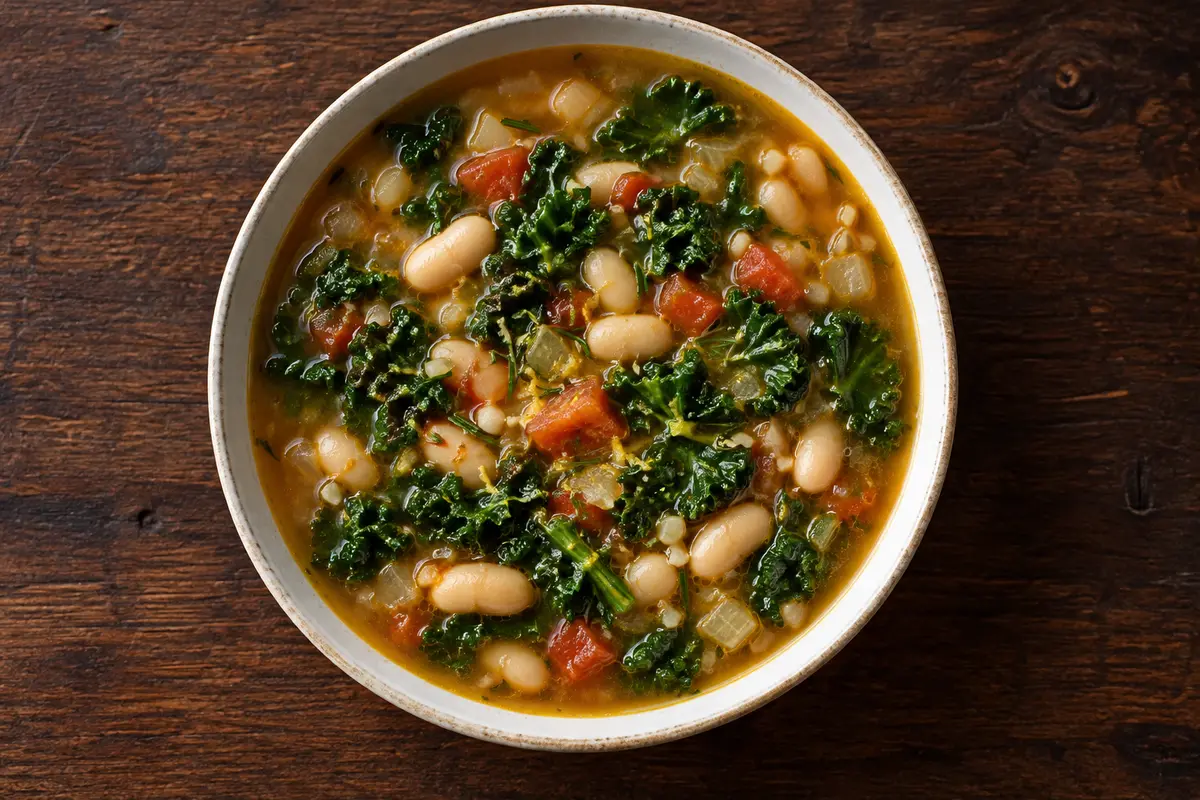
What to look for
Leaves should be deeply colored and crisp without yellow patches. Lacinato kale is flatter; curly kale has more ruffled edges.
Store it thoughtfully
Refrigerate unwashed and loosely wrapped, then wash thoroughly before use. Dry leaves well for salad or chips.
How to use it
Strip tough stems, slice the leaves, and cook until the desired tenderness. For raw salad, massage briefly with dressing to soften the texture.
When you need a substitute
Collard greens need longer cooking; spinach wilts much faster. Swiss chard stems require separate timing from its leaves.
A common pitfallLeaving thick stems in a quick sauté creates tough bites even when the leaves are fully cooked.
Substitutions change flavor, texture, and sometimes safety or structure. Check the recipe and product labels, especially for dietary needs.