What to look for
Choose cultivated edible mushrooms that are firm, without slime or spoilage.
Store it thoughtfully
Refrigerate in breathable packaging and use while fresh.
How to use it
Clean, dry and sauté in batches so released moisture can evaporate.
When you need a substitute
Another cultivated mushroom variety can work, with adjusted trimming and cooking.
Substitutions change flavor, texture, and sometimes safety or structure. Check the recipe and product labels, especially for dietary needs.
Practical kitchen notes
Choose the right texture
Button mushrooms are mild; cremini give a deeper savory flavor and portobello caps work well sliced or stuffed. Dried mushrooms need rehydration and are not a same-weight replacement for fresh. Strain soaking liquid through a fine filter if using it in a sauce to remove grit. Never identify or eat wild mushrooms from an online guide.
Browning rather than steaming
Trim tough stem ends, remove dirt and slice evenly. Brief rinsing is an option, but dry well before cooking. Use a broad pan and a single loose layer. As released water evaporates, keep cooking until the edges color; a crowded pan needs batches. Add garlic late so it does not burn while mushrooms shed moisture.
When the pan goes wrong
Pale, wet mushrooms usually need more space and evaporation, not more oil. If they stick, allow browning before trying to turn them, then adjust heat if darkening too quickly. Rubbery results may improve when sliced more thinly next time.
Example and storage
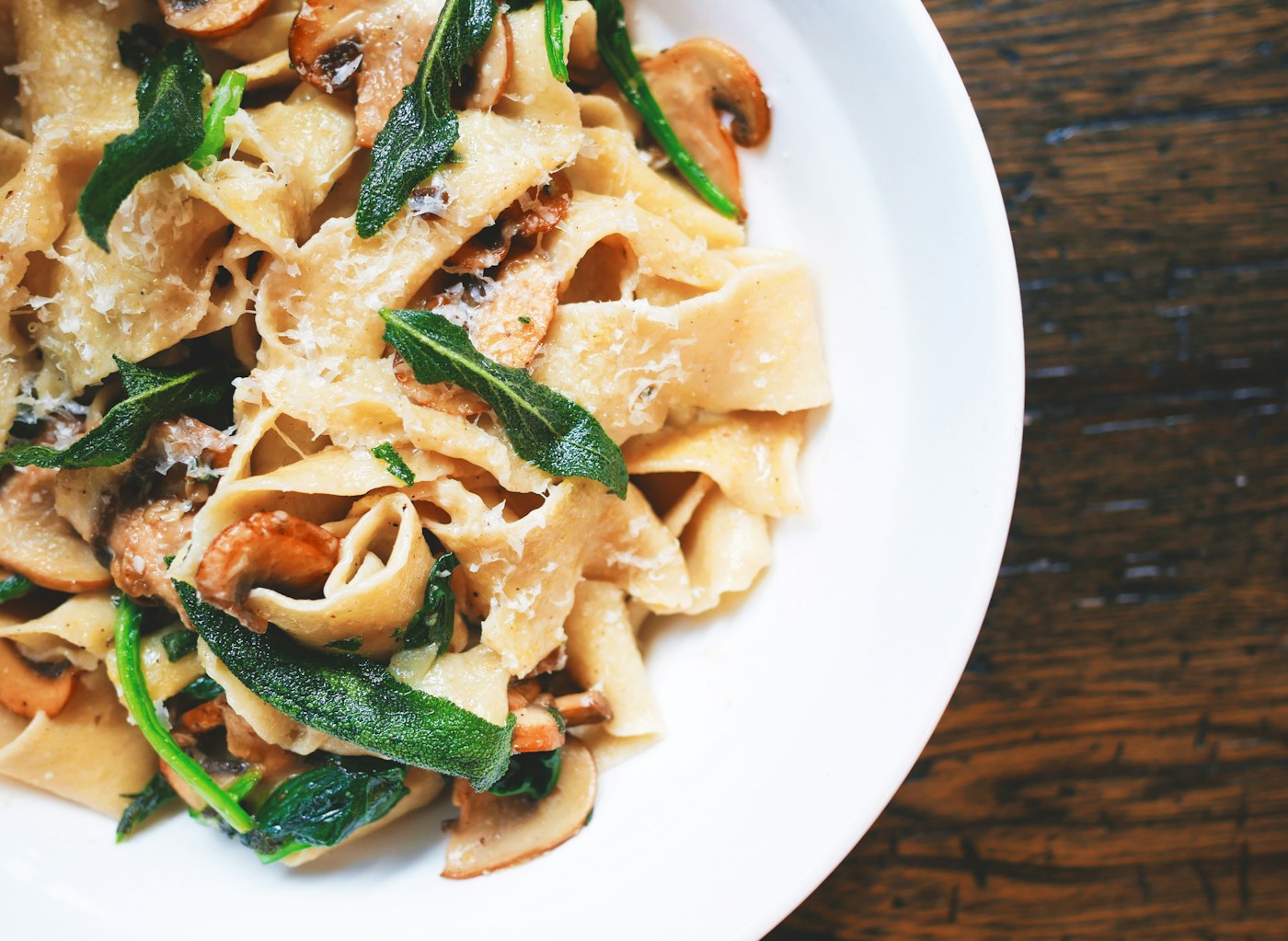
For mushroom pasta, brown the mushrooms before adding cream. For soup, a softer texture is acceptable because they simmer in liquid. Keep refrigerated with airflow rather than trapping condensation; discard slimy or moldy mushrooms.