Start with sound handling
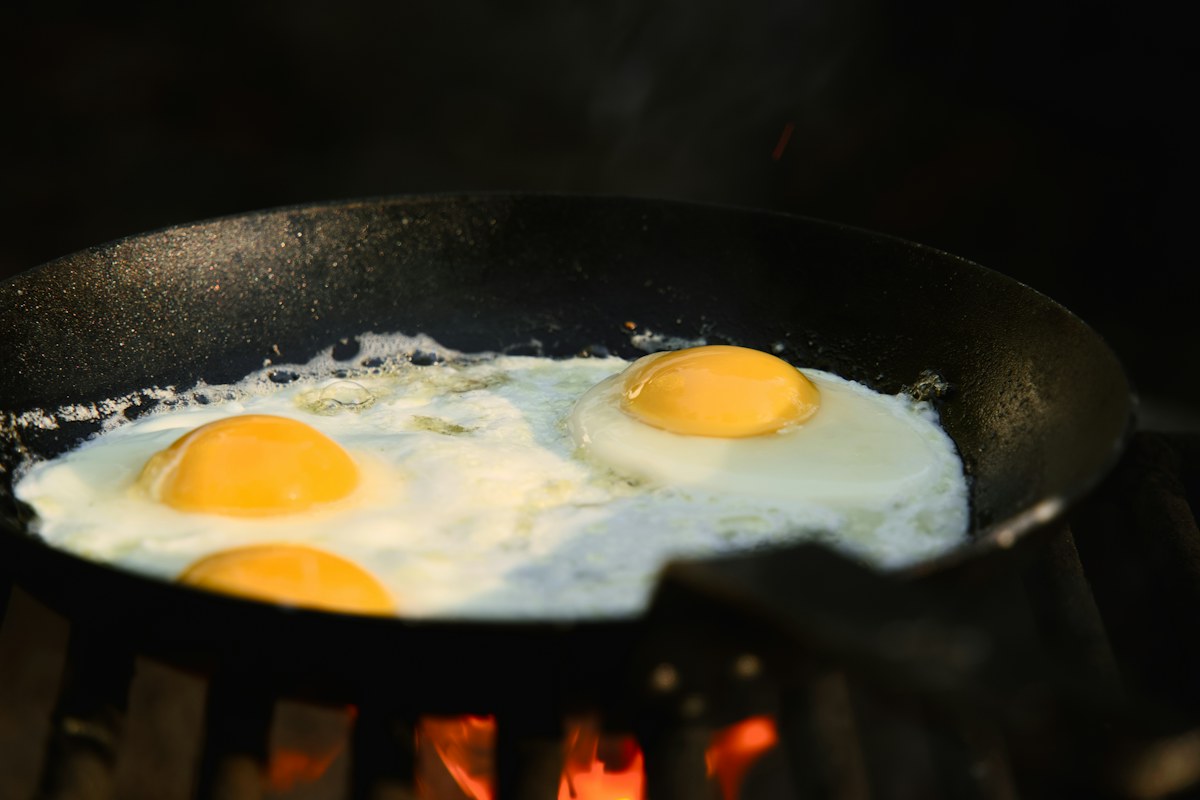
Buy refrigerated eggs with intact shells and keep them refrigerated in their carton. Crack into a separate small bowl before adding to a larger mixture. Wash hands and equipment after contact with raw eggs, and keep raw egg away from ready-to-eat ingredients.
Scramble with intention
Beat eggs until whites and yolks are blended. Use a suitable pan over moderate or low heat and move the setting eggs gently with a spatula. Large, slow folds give bigger curds; frequent stirring gives smaller ones. Cook until set, with no runny egg remaining.
Prepare omelet fillings first
Cook wet ingredients such as mushrooms separately so they do not release water into the eggs. Have cheese and garnishes ready. Use a modest amount of filling; an overstuffed omelet is hard to fold and may leave the center unevenly cooked.
Check safety as well as texture
FDA advises cooking whole eggs until the white and yolk are firm and egg dishes to 160°F. For a baked egg dish, check the center with a thermometer. Excess heat can make eggs rubbery, so control the rate of cooking rather than stopping before a safe endpoint.
Your next kitchen exercise
Cook a two-egg scramble over controlled heat. Write down when the first curds form and how stirring frequency changes their size.