What you will learn
Turn drippings into a balanced gravy without raw flour taste or stubborn lumps. The goal is not merely to copy motions. You will learn why the sequence works, which clues matter, and what to change when your stove, pan, ingredient size, or timing differs.
Why it matters
Beginners are often given short instructions without the decisions behind them. This lesson turns the vague parts into actions you can observe and repeat, so an ordinary variation does not force you to guess.
What you need
Roasting pan or skillet, whisk, measuring cup, and saucepan if needed.
Before you start
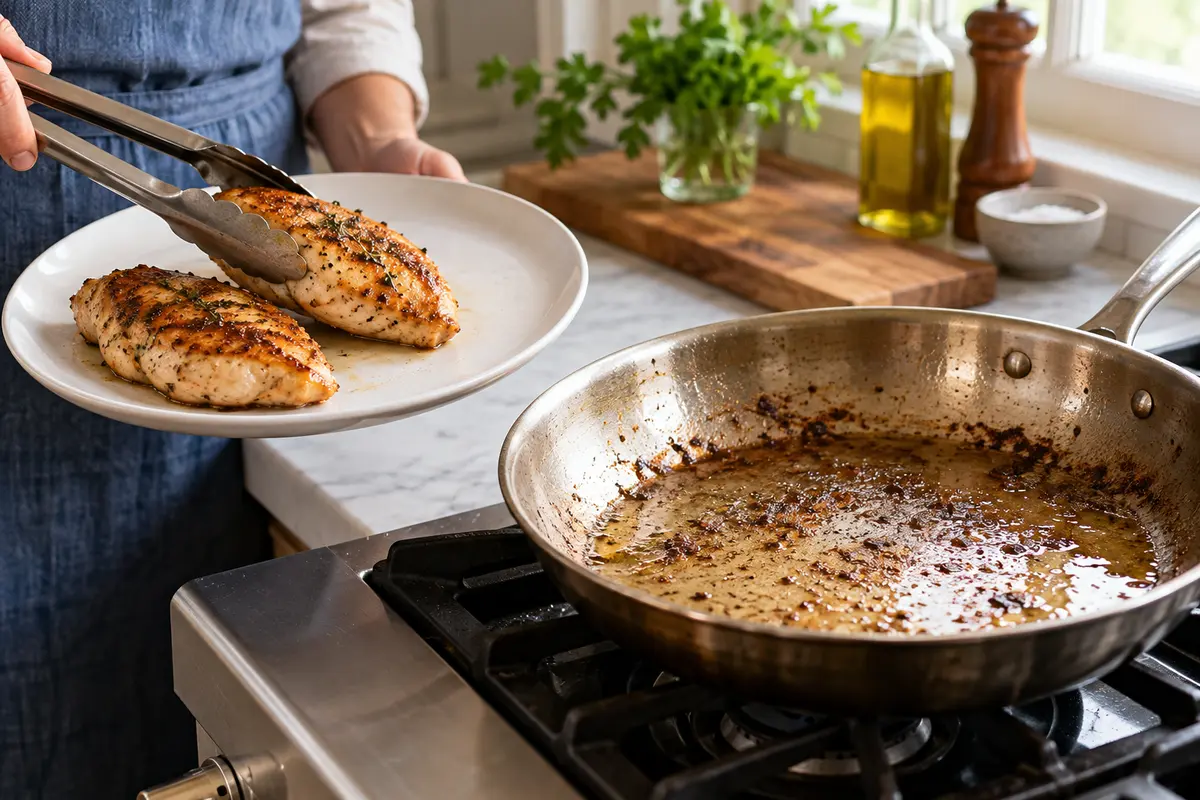
Separate usable browned drippings from black burnt bits. Measure the fat and liquid rather than guessing, and keep hot-pan handles protected.
Measure the fat
Use about equal volumes of fat and flour for a basic roux. Remove excess grease, leaving flavorful browned bits if they are not burned.
Cook the flour
Whisk flour into the warm fat over medium-low heat and cook until the mixture smells nutty rather than raw.
Add liquid gradually
Pour in warm, preferably unsalted stock a little at a time, whisking each addition smooth before adding more.
Simmer to finish
Bring to a gentle simmer so the flour can thicken fully. Scrape the bottom and corners, and strain only if necessary.
Adjust at the end
Taste after reduction. Thin with stock if too thick; simmer longer if too thin. Add salt only after considering the drippings.
What good progress looks like
The gravy pours in a continuous ribbon, coats a spoon without paste-like thickness, and tastes savory rather than floury or burnt.
Common mistakes and a useful response
Dumping all liquid into roux at once encourages lumps. Salting before concentrated drippings are diluted can make the gravy impossible to balance.
A small practice exercise
Make a small practice gravy with one tablespoon each butter and flour plus one cup unsalted stock.
Keep the exercise small enough that you can pay attention. Repeating one controlled action teaches more than changing several variables in a complicated meal.