What you will learn
Combine oil, acid, mustard, and seasoning into a dressing you can adjust by tasting. The goal is not merely to copy motions. You will learn why the sequence works, which clues matter, and what to change when your stove, pan, ingredient size, or timing differs.
Why it matters
Beginners are often given short instructions without the decisions behind them. This lesson turns the vague parts into actions you can observe and repeat, so an ordinary variation does not force you to guess.
What you need
Small jar or bowl, whisk or fork, and measuring spoons.
Before you start
Use a clean container with a secure lid. Check mustard and other packaged ingredients for allergens and sodium.
Begin with a ratio
Start around three parts oil to one part vinegar or lemon juice, then adjust for the acid and the food. This is a starting point, not a law.
Dissolve seasonings
Whisk salt, pepper, and any sweetener into the acid first so they distribute before oil surrounds them.
Add an emulsifier
A small spoonful of mustard helps droplets stay suspended and adds flavor.
Add oil gradually
Whisk while pouring a thin stream, or seal the jar and shake firmly. Temporary separation is normal.
Taste on the food
A dressing tastes stronger alone than on lettuce or grains. Dip a leaf or spoonful of the actual salad before adjusting.
What good progress looks like
The mixture looks lightly creamy or evenly speckled after whisking, clings to a leaf, and tastes bright without harshness.
Common mistakes and a useful response
Pouring dressing over wet greens dilutes it. Adding sweetness to hide too much vinegar may make it cloying; add more oil and seasoning thoughtfully.
A small practice exercise
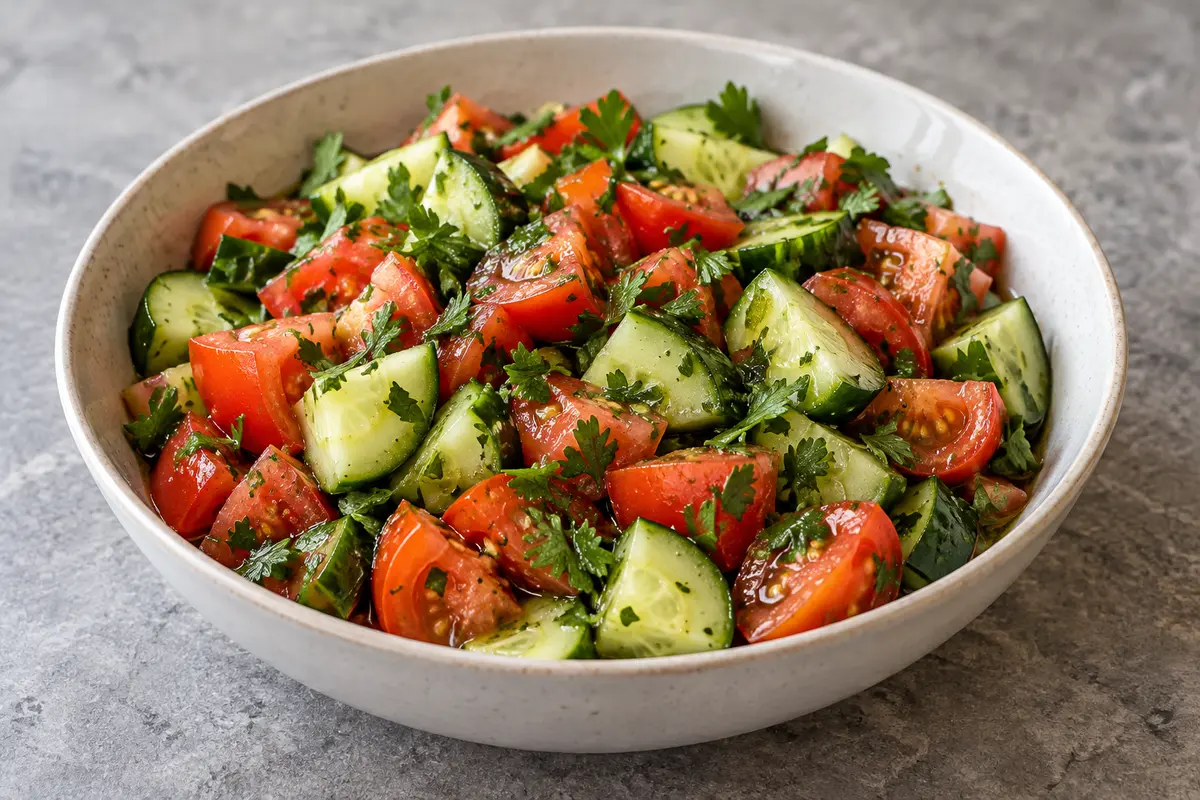
Make three tablespoons of dressing, taste it on a cucumber slice, and adjust one variable at a time.
Keep the exercise small enough that you can pay attention. Repeating one controlled action teaches more than changing several variables in a complicated meal.