What you will learn
Prevent heavy cakes, dry cookies, and stiff dough by avoiding compacted flour. The goal is not merely to copy motions. You will learn why the sequence works, which clues matter, and what to change when your stove, pan, ingredient size, or timing differs.
Why it matters
Beginners are often given short instructions without the decisions behind them. This lesson turns the vague parts into actions you can observe and repeat, so an ordinary variation does not force you to guess.
What you need
A kitchen scale, or dry measuring cups plus a spoon and straight edge.
Before you start
Check whether the recipe gives grams. Weighing is the most repeatable option. If it specifies sifted flour, notice whether sifting happens before or after measuring.
Weigh when possible
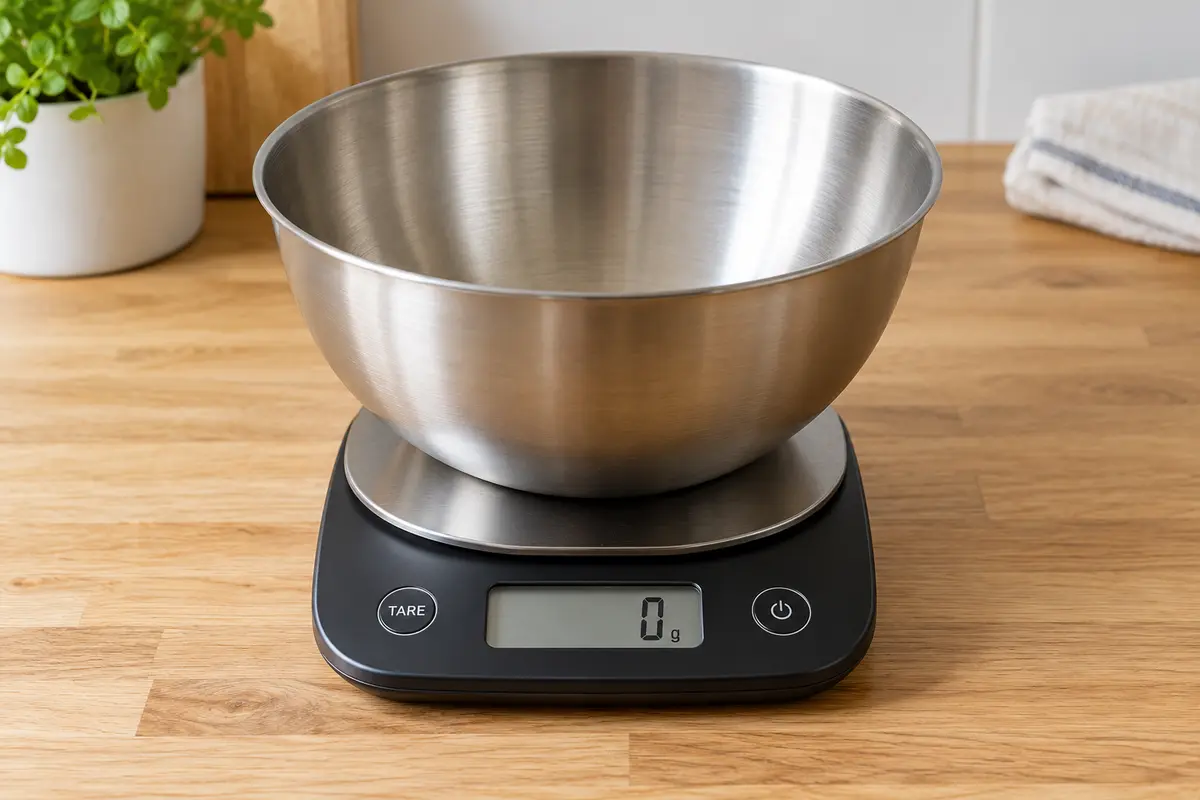
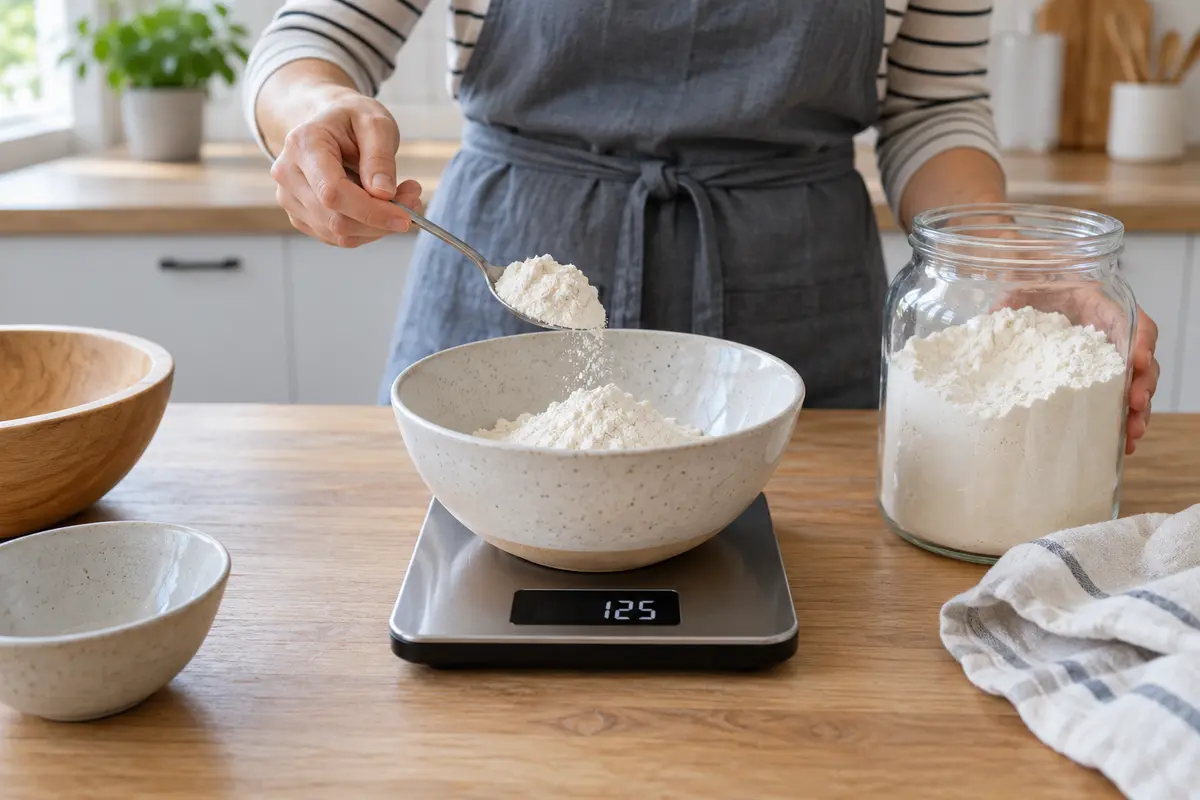
Place the bowl on the scale, press tare, and add flour until the display reaches the recipe's gram amount. Stop before adding other ingredients if you need to remove excess.
Loosen the flour
When using cups, stir the flour in its container so it is not compressed from storage. Do not shake the container down.
Spoon it in
Lightly spoon flour into the dry cup until it mounds above the rim. Do not scoop and pack the cup through the flour.
Level once
Sweep a straight edge across the rim without tapping or pressing. Return the excess to the container.
Judge the mixture
After mixing, compare the batter or dough with the recipe's texture cues. Do not automatically add more flour because a dough feels slightly tacky.
What good progress looks like
Flour falls lightly into the cup or reaches the gram target without compression. The finished mixture matches the recipe's described flow or softness.
Common mistakes and a useful response
Scooping directly with the cup can pack in substantially more flour. Adding repeated handfuls to stop all stickiness often makes bread and biscuits dense.
A small practice exercise
Measure one cup by scooping and another by spooning and leveling, then weigh both. The difference explains why baking results can change.
Keep the exercise small enough that you can pay attention. Repeating one controlled action teaches more than changing several variables in a complicated meal.