What you will learn
Use marked cups and spoons accurately, especially when baking or mixing sauces. The goal is not merely to copy motions. You will learn why the sequence works, which clues matter, and what to change when your stove, pan, ingredient size, or timing differs.
Why it matters
Beginners are often given short instructions without the decisions behind them. This lesson turns the vague parts into actions you can observe and repeat, so an ordinary variation does not force you to guess.
What you need
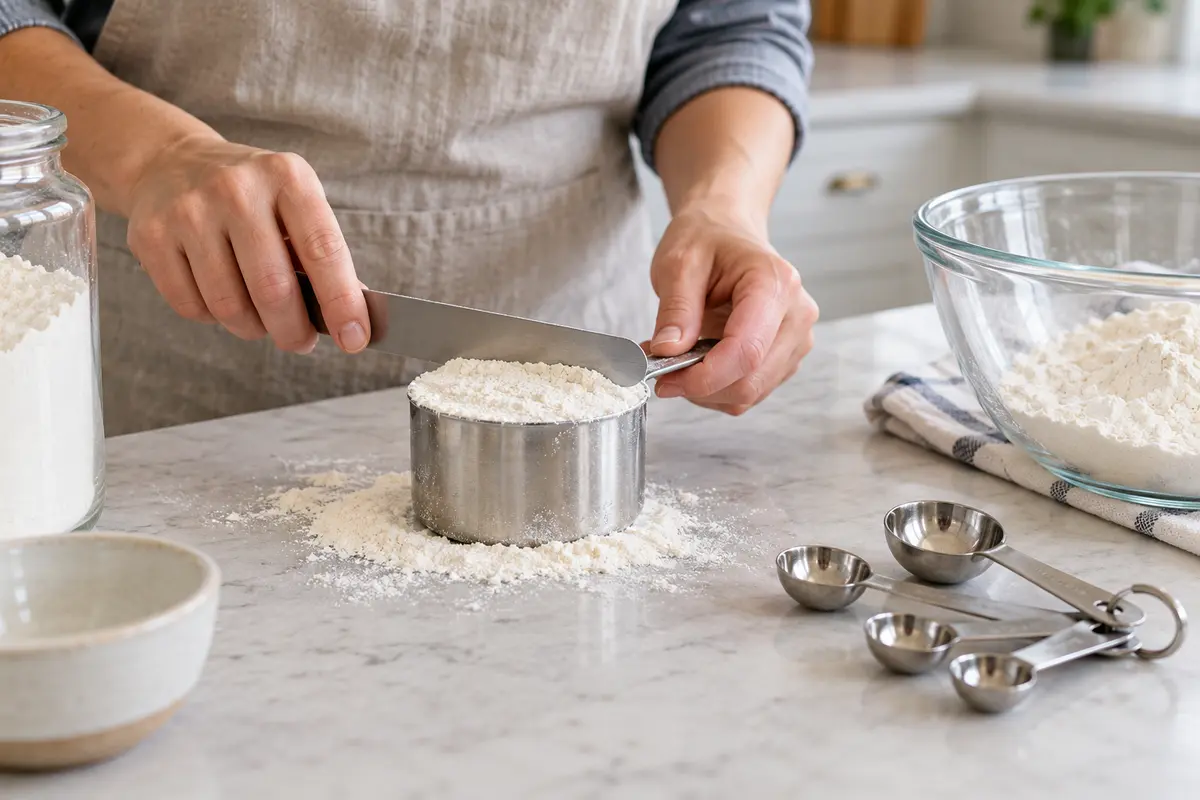
A clear liquid measuring cup, measuring spoons, and a level counter.
Before you start
Confirm whether the recipe uses US volume, metric milliliters, or weight. Do not assume a drinking cup equals a measured cup.
Use the right vessel
For larger amounts, choose a clear cup with space above the target line. For tablespoons and teaspoons, fill the correct spoon to the rim.
Set it down
Place the cup on a level surface. Holding it in the air tilts the liquid and changes what the line appears to show.
Read at eye level
Lower your eyes to the marking and read the bottom of the curved liquid surface for water-like liquids. Avoid judging from above.
Handle small amounts
Measure vanilla, vinegar, and strong seasonings over a small bowl if an accidental spill would ruin the main mixture.
Pour cleanly
Use the spout and pause at the line. If you overshoot, remove a little with a spoon rather than trying to estimate the excess.
What good progress looks like
The liquid sits exactly at the intended line while the cup rests flat, with enough empty space that it can be carried without sloshing.
Common mistakes and a useful response
Reading from above usually adds too much. Confusing fluid ounces with weight ounces is another common mistake; they measure different things.
A small practice exercise
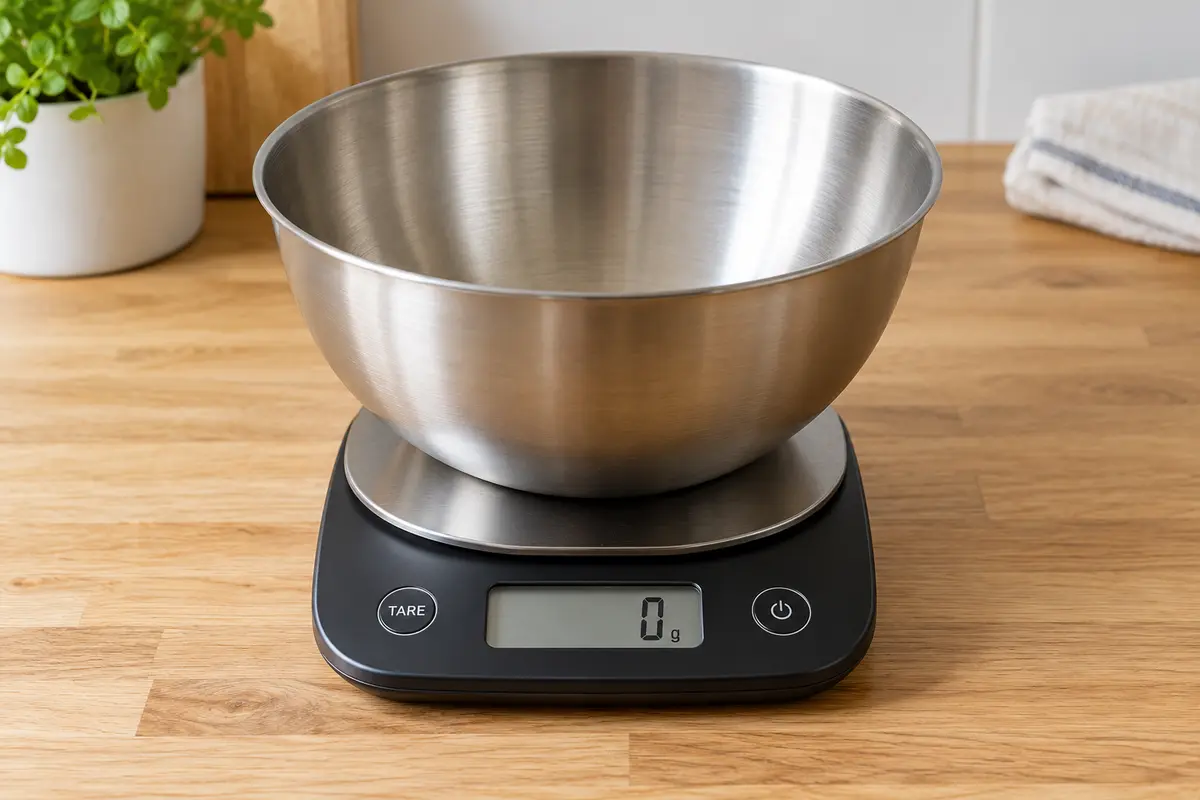
Measure 120 milliliters of water, then pour it onto a scale. It should be close to 120 grams, allowing for normal household measuring variation.
Keep the exercise small enough that you can pay attention. Repeating one controlled action teaches more than changing several variables in a complicated meal.