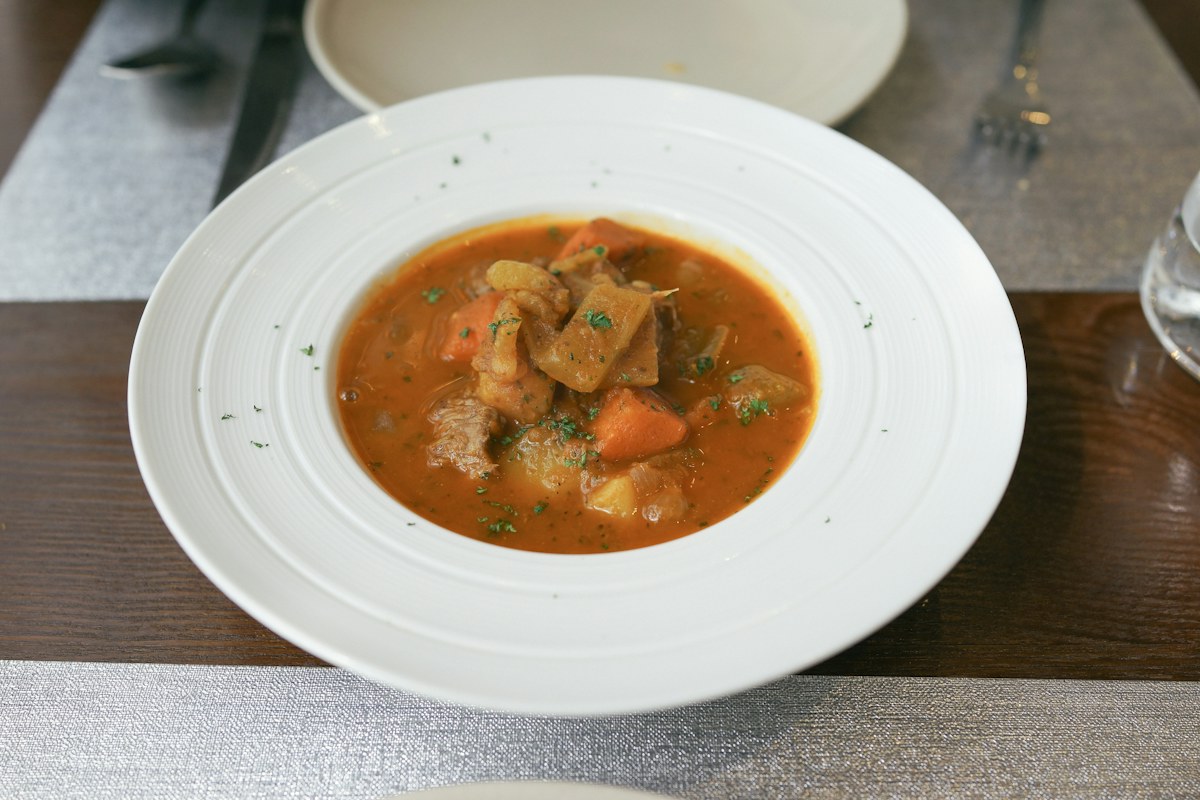
Separate purchased and usable weight
Purchased weight includes peel, bones, trim or liquid that may not reach the plate. If 1kg of produce yields 800g usable after trimming, usable yield is 80%. Save useful trim appropriately, but do not count every scrap as an immediate cost saving.
Calculate ingredient cost consistently
Divide package cost by package weight to get a unit cost, then multiply by the amount used. Use the same units throughout. A $4 package weighing 500g costs $0.008 per gram; 125g contributes $1 to the recipe. Include oil, spices and garnishes rather than pretending they are free.
Measure the finished yield
Weigh or count the usable finished batch and divide it into realistic portions. A pot described as six servings can become four larger bowls. Portion cost equals total ingredient cost divided by actual portions. Record cooking loss and leftovers so future batches are easier to plan.
Do not confuse food cost with profit
Ingredient cost is only one expense. Paid food service also involves labor, utilities, packaging, rent, insurance, waste and applicable requirements. A food-cost percentage can be a planning tool, but no universal percentage guarantees a viable price or a profitable business.
Your next kitchen exercise
Cost one household dinner from receipts. Record purchased weight, usable weight, total ingredient cost and cost per portion.