What you will learn
Use natural waiting periods to reset safely while keeping attention on active heat. The goal is not merely to copy motions. You will learn why the sequence works, which clues matter, and what to change when your stove, pan, ingredient size, or timing differs.
Why it matters
Beginners are often given short instructions without the decisions behind them. This lesson turns the vague parts into actions you can observe and repeat, so an ordinary variation does not force you to guess.
What you need
Scrap bowl, sink or dishpan, clean towels, soap, and timer.
Before you start
Never leave a pan that needs active attention in order to wash dishes. Keep knives visible and wash them separately rather than hiding them in suds.
Start with an empty sink
A clear sink gives dirty tools somewhere to go without stacking them on food-prep space.
Contain scraps
Use one bowl for trimmings and wrappers, separating anything your local waste system handles differently.
Use passive windows
Wash a bowl while water comes to a boil or food bakes, but set a timer and remain close enough to monitor.
Reset between raw and ready-to-eat work
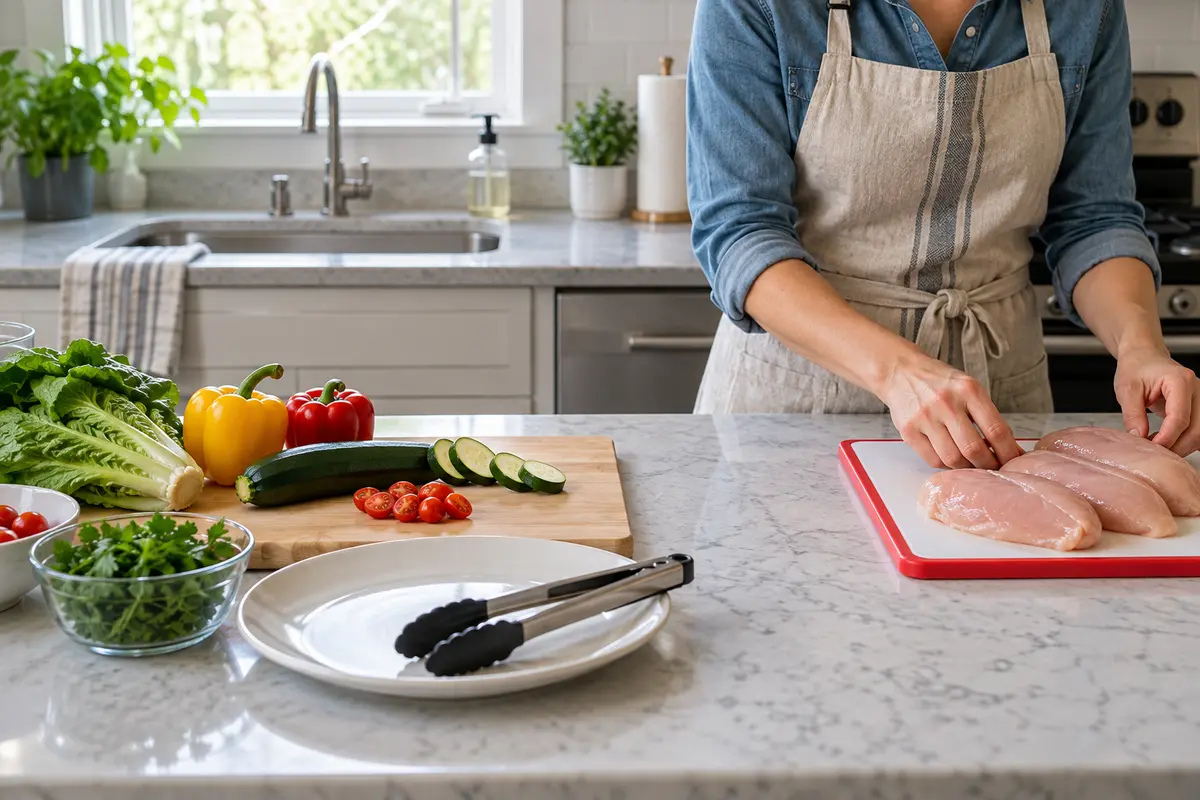
Wash hands, tools, and surfaces after raw protein before preparing salad, garnish, or cooked food.
Leave a safe finish
Turn off burners, store leftovers promptly, soak only cooled cookware, and wipe spills after hot surfaces are safe.
What good progress looks like
The board and sink never become unusable, active cooking remains monitored, and raw-contact items do not mix with serving tools.
Common mistakes and a useful response
Filling the sink with hidden knives is dangerous. Cleaning around an unattended hot-oil pan is not efficient; it divides attention at the riskiest moment.
A small practice exercise
Cook one simple pasta meal and choose three planned cleaning windows before you start.
Keep the exercise small enough that you can pay attention. Repeating one controlled action teaches more than changing several variables in a complicated meal.