What you will learn
Reduce dry edges and raw thick centers by managing thickness, heat, and temperature. The goal is not merely to copy motions. You will learn why the sequence works, which clues matter, and what to change when your stove, pan, ingredient size, or timing differs.
Why it matters
Beginners are often given short instructions without the decisions behind them. This lesson turns the vague parts into actions you can observe and repeat, so an ordinary variation does not force you to guess.
What you need
Separate raw-meat board, skillet or sheet pan, tongs, and instant-read thermometer.
Before you start
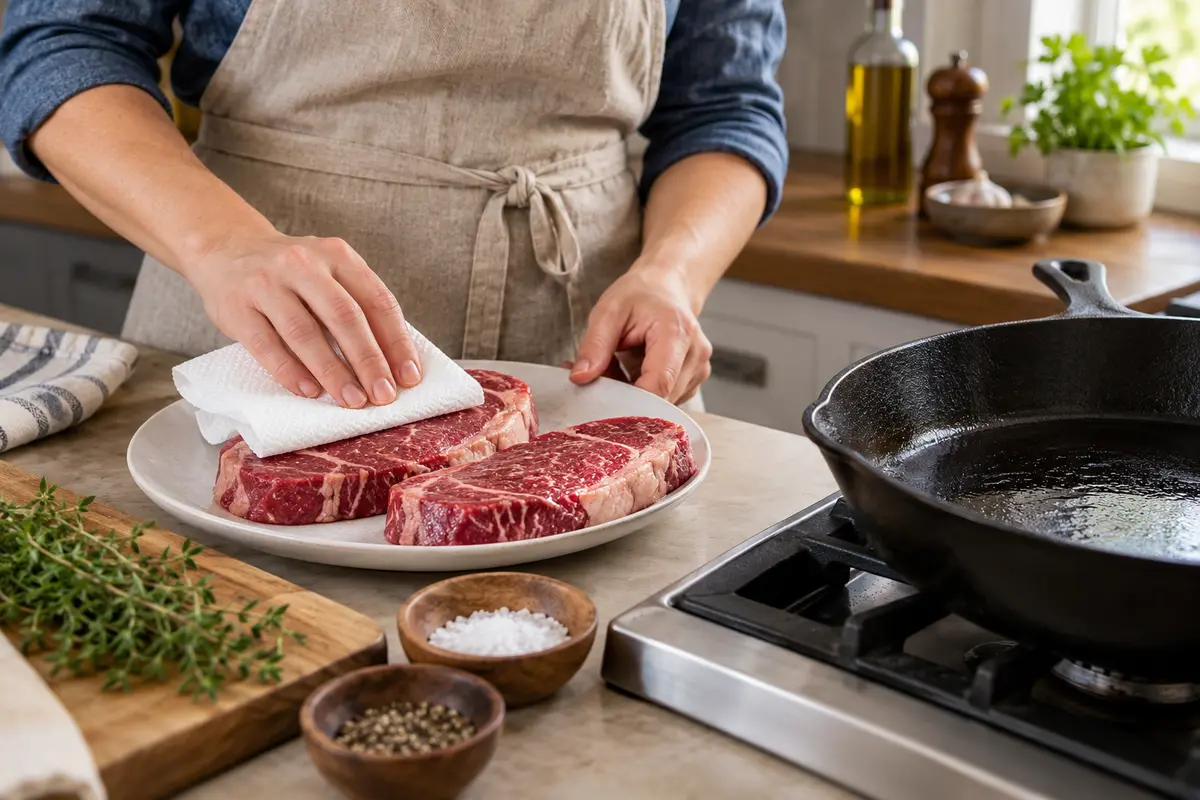
Do not wash raw chicken. Pat dry with disposable towel, clean hands and surfaces, and keep the cooked-food plate separate.
Even the thickness
Place the breast between suitable sheets and gently pound the thick end, or slice horizontally when the recipe directs. Aim for a more consistent profile.
Season and preheat
Season shortly before cooking and preheat the pan moderately. Very high heat darkens the outside too soon.
Cook the first side
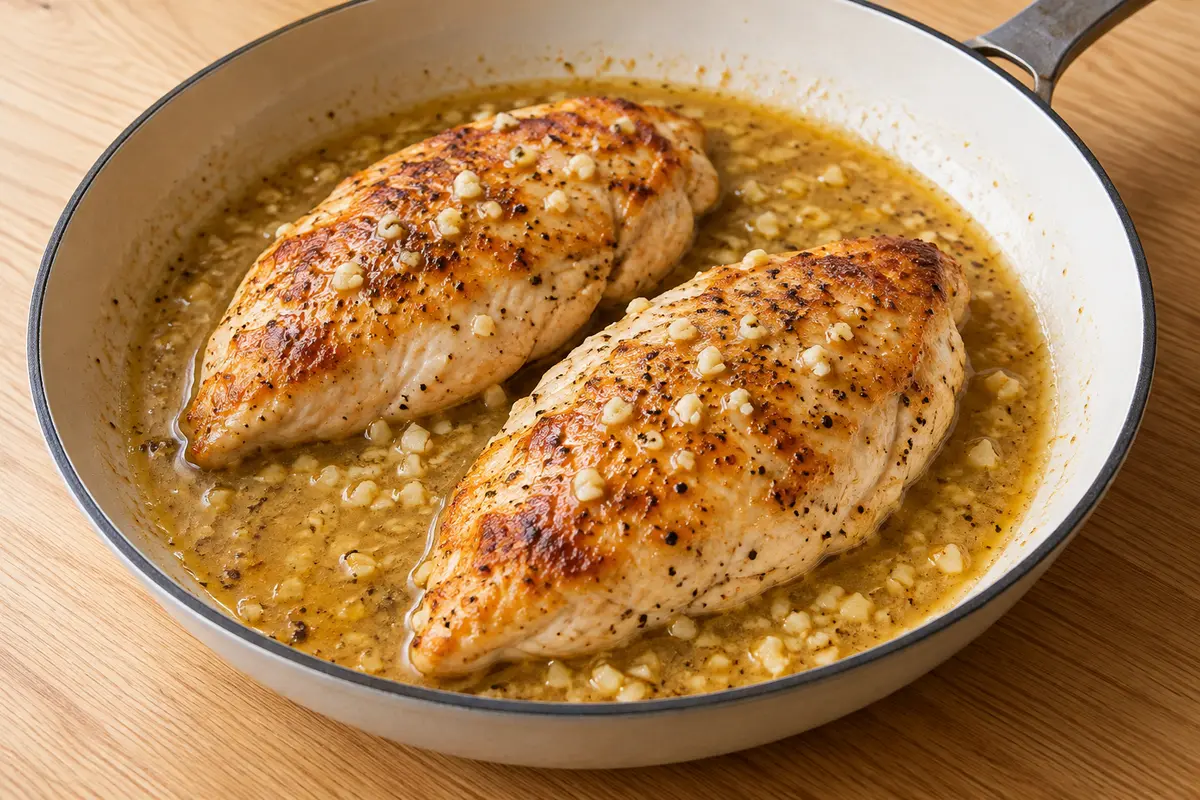
Set the chicken down and leave it until golden and naturally releasing. Adjust heat if the fond turns black.
Turn and finish gently
Flip once the first side is developed, then reduce heat if necessary. Thicker pieces may finish more evenly in a moderate oven.
Measure the center
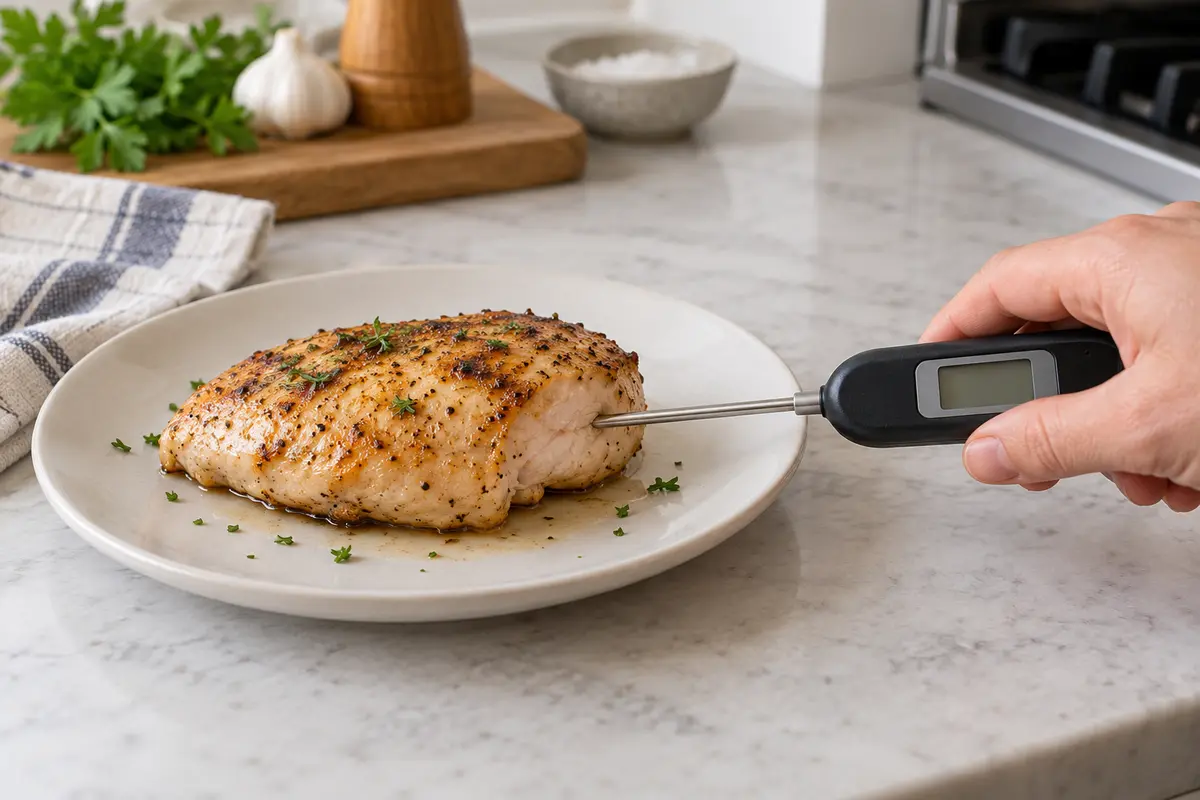
Insert the thermometer from the side into the thickest part. Poultry must reach 165°F / 74°C; rest briefly on a clean plate.
What good progress looks like
Browning is golden rather than black, the thickest point reaches 165°F / 74°C, and juices stay on the clean resting plate.
Common mistakes and a useful response
Color and clear juices cannot prove safety. Cutting repeatedly releases moisture, while blasting thick chicken on high heat leaves an unsafe center.
A small practice exercise
Cook one evenly pounded breast and record the pan setting, time per side, and thickest-point temperature for your stove.
Keep the exercise small enough that you can pay attention. Repeating one controlled action teaches more than changing several variables in a complicated meal.