What you will learn
Measure the coldest likely spot without touching bone, pan, or empty space. The goal is not merely to copy motions. You will learn why the sequence works, which clues matter, and what to change when your stove, pan, ingredient size, or timing differs.
Why it matters
Beginners are often given short instructions without the decisions behind them. This lesson turns the vague parts into actions you can observe and repeat, so an ordinary variation does not force you to guess.
What you need
An instant-read digital thermometer, soap or sanitizing supplies, and the food being checked.
Before you start
Read the thermometer's instructions, confirm it is clean, and know the current target for the specific food. Official guidance overrides general texture cues.
Choose the thickest area
Look for the part that would heat most slowly. Avoid visible bone, large fat pockets, and the hot cooking surface.
Insert along the food
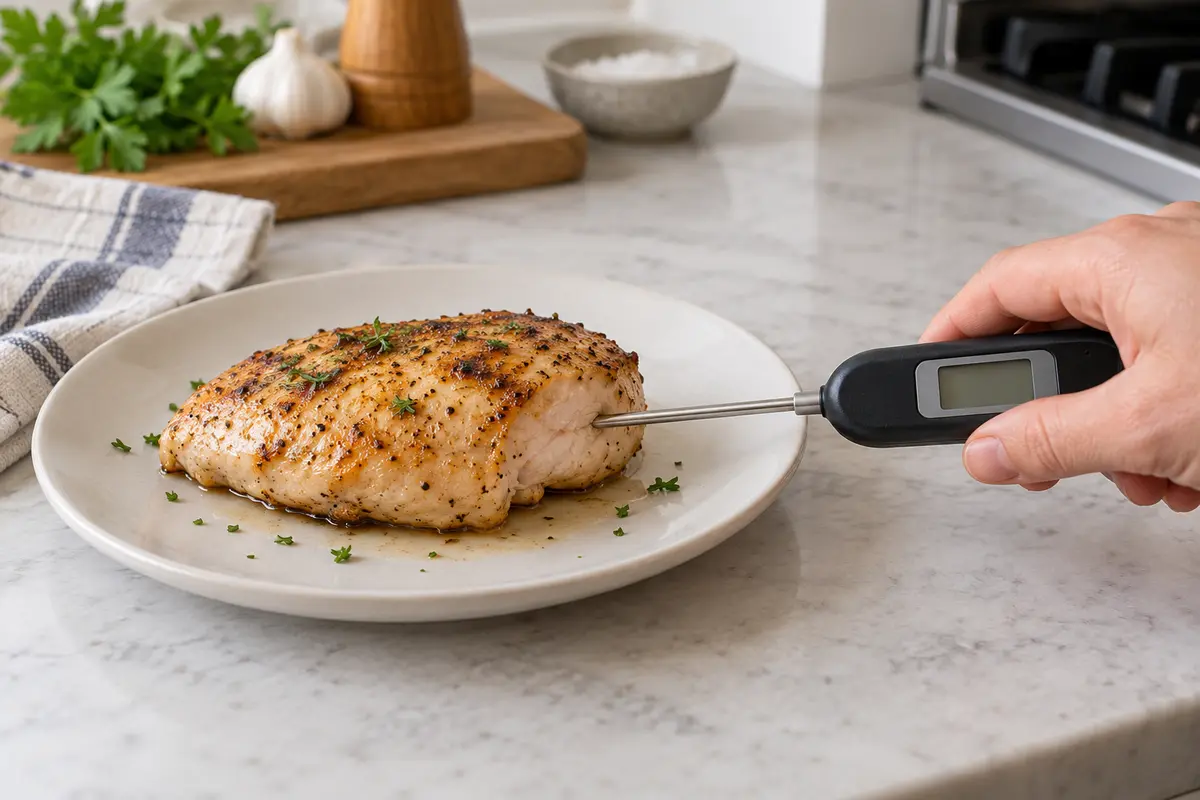
For thin meat, insert from the side so more probe tip sits in the center. For large items, approach the center from the most direct safe angle.
Wait for a stable reading
Hold the probe still until the display stops changing. Do not wave it through the food.
Check more than one place
Uneven pieces, ground-meat patties, and casseroles may have cooler areas. Clean the probe between checks if it contacts undercooked food.
Act on the number
Continue cooking if any required spot is below target. Recheck after a short interval and clean the probe after final use.
What good progress looks like
The tip is centered in the thickest edible portion, the display stabilizes, and several checks agree closely above the required target.
Common mistakes and a useful response
Touching bone or the pan can give a falsely high reading. Measuring only a thin edge can miss an unsafe center. Color is not a substitute.
A small practice exercise
Fill one glass with ice water and check calibration according to the thermometer maker's instructions, then practice side-entry placement on a baked potato.
Keep the exercise small enough that you can pay attention. Repeating one controlled action teaches more than changing several variables in a complicated meal.