What you will learn
Choose practical cut sizes without memorizing professional French names. The goal is not merely to copy motions. You will learn why the sequence works, which clues matter, and what to change when your stove, pan, ingredient size, or timing differs.
Why it matters
Beginners are often given short instructions without the decisions behind them. This lesson turns the vague parts into actions you can observe and repeat, so an ordinary variation does not force you to guess.
What you need
A sharp chef's knife, stable cutting board, and a bowl for prepared pieces.
Before you start
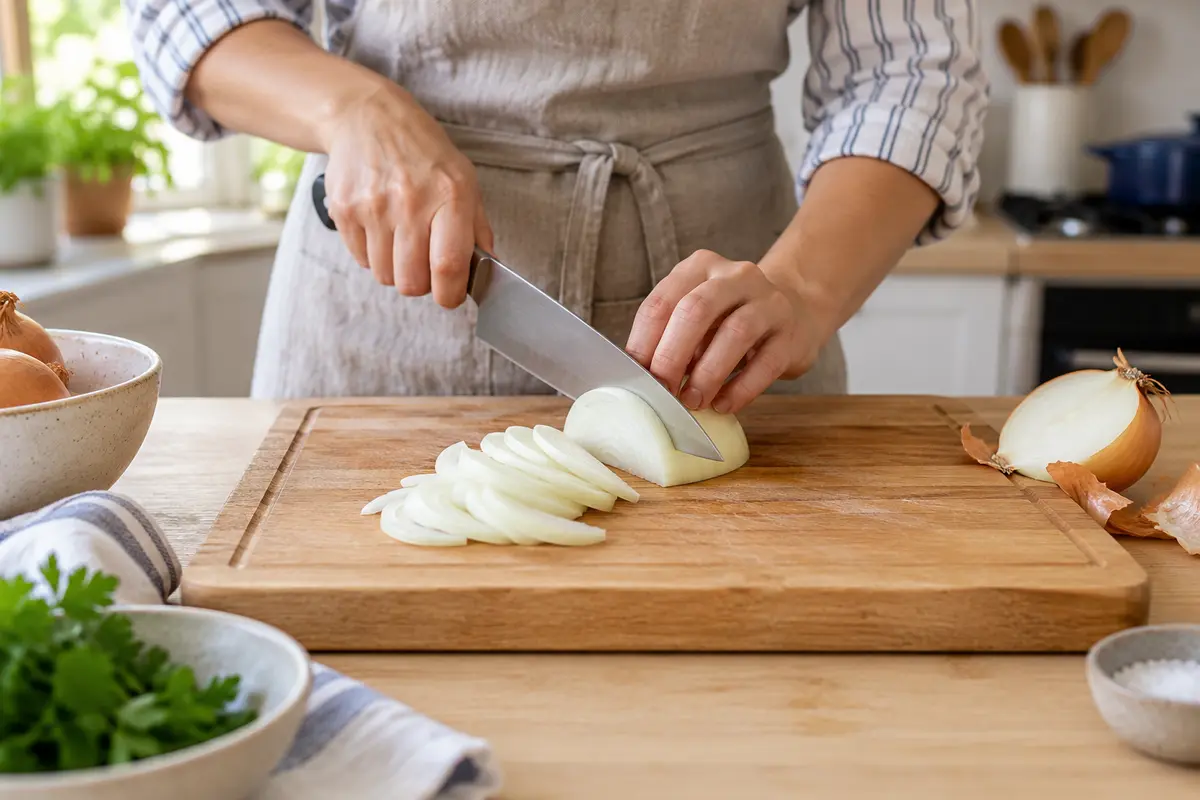
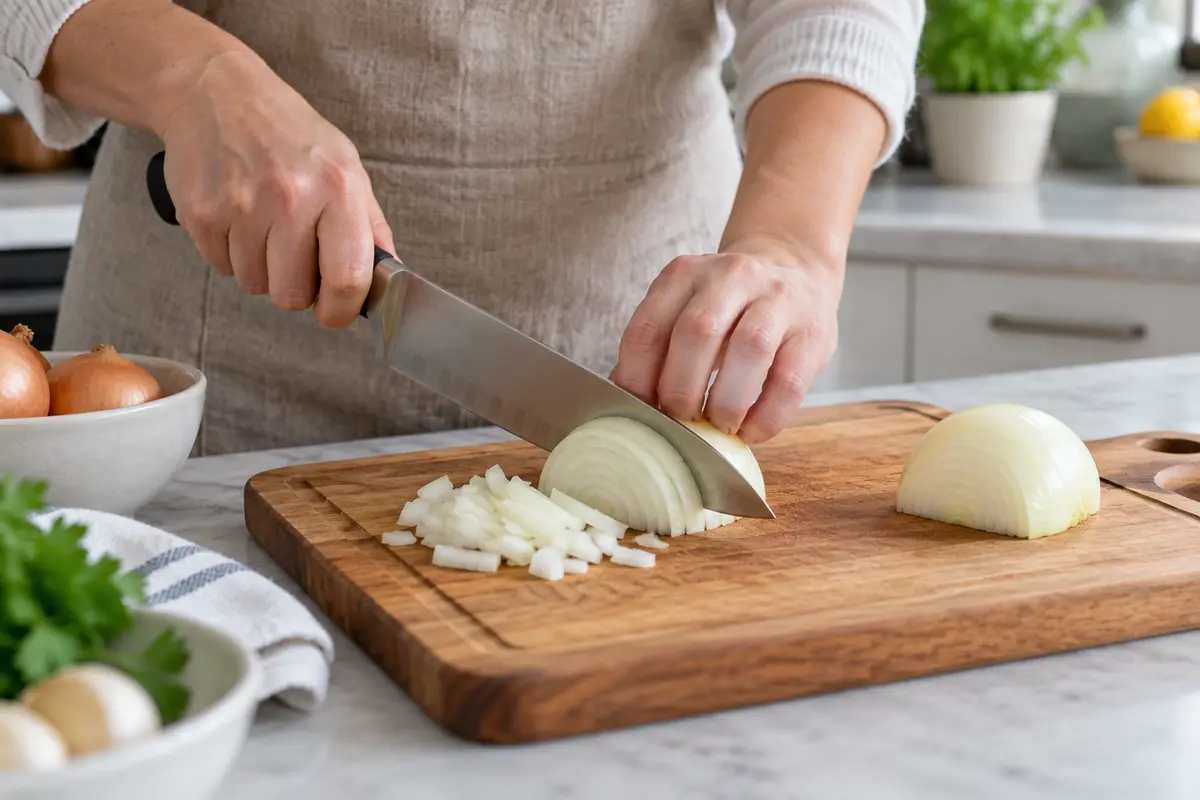
Wash produce, dry it so it does not slip, and trim damaged areas. Stabilize round vegetables by creating a flat side before repeated cuts.
Decide by cooking time
Cut dense carrots or potatoes smaller than quick-cooking zucchini when they share a pan. Pieces that finish together do not always need the same shape.
Create stable sections
Break long or round vegetables into manageable lengths. Put a flat cut face on the board before slicing again.
Use the first piece as a guide
Set one correctly sized piece near the top of the board and compare later pieces with it. Perfection is unnecessary; large outliers matter.
Separate different speeds
Keep onions, garlic, leafy greens, and dense roots in different piles if they enter the pan at different times.
Adjust while cooking
If some pieces are browning before the centers soften, lower the heat and add a small splash of water or cover briefly when the recipe permits.
What good progress looks like
Most pieces in each ingredient group are close enough in thickness to soften together, and the board stays stable throughout cutting.
Common mistakes and a useful response
Tiny garlic mixed with large raw carrots will burn long before the carrots soften. Cutting unstable food while it rolls is a safety problem, not a speed challenge.
A small practice exercise
Cut one carrot into deliberately uneven pieces and another into similar pieces. Simmer them separately and compare which batch becomes tender together.
Keep the exercise small enough that you can pay attention. Repeating one controlled action teaches more than changing several variables in a complicated meal.