What you will learn
Diagnose water, heat, lid, and resting problems before disturbing the whole pot. The goal is not merely to copy motions. You will learn why the sequence works, which clues matter, and what to change when your stove, pan, ingredient size, or timing differs.
Why it matters
Beginners are often given short instructions without the decisions behind them. This lesson turns the vague parts into actions you can observe and repeat, so an ordinary variation does not force you to guess.
What you need
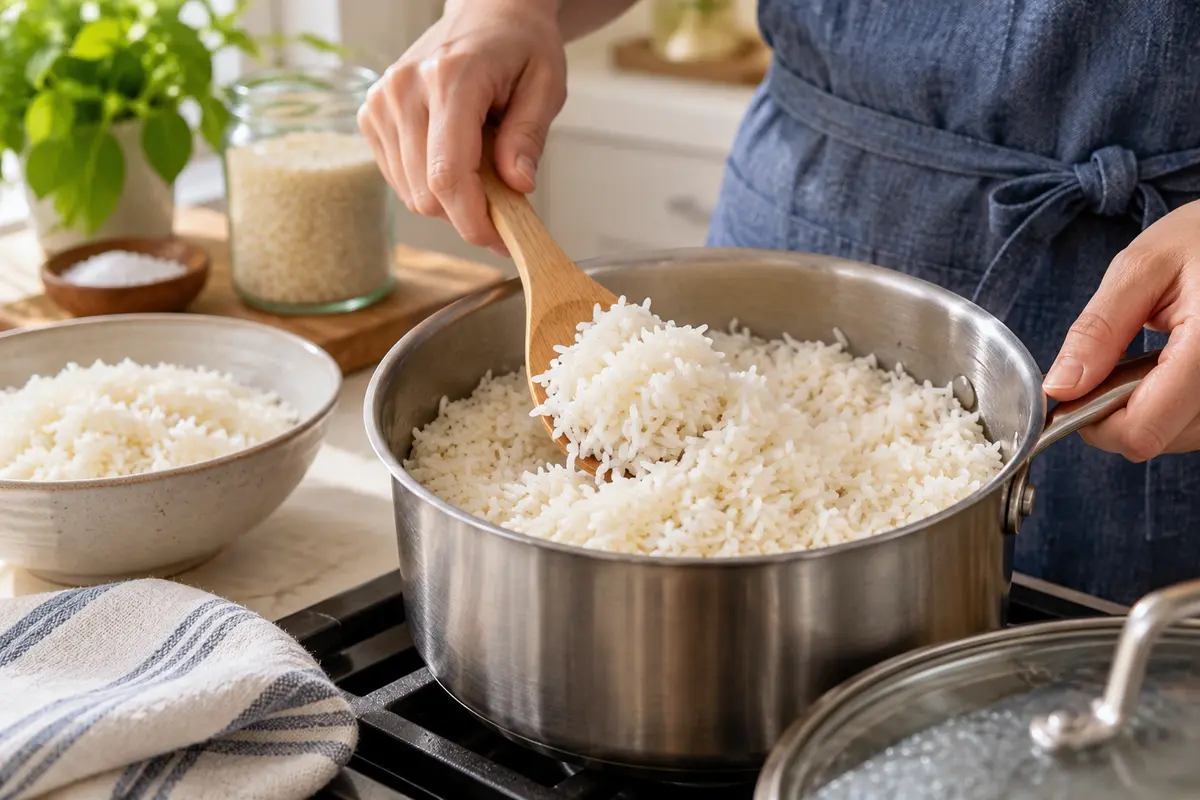
Saucepan with tight lid, fork, clean towel, and measured water.
Before you start
Confirm the rice variety and package ratio; different rice needs different liquid and time. Cool and refrigerate cooked rice promptly if saving it.
If rice is wet
Remove the lid and let gentle heat release excess steam for a few minutes. Avoid vigorous stirring, which releases more starch.
If rice is firm and dry
Sprinkle in a small measured amount of water, cover tightly, and cook on low for a few minutes before resting again.
If the bottom scorched
Do not scrape it. Transfer the unaffected upper rice to a clean bowl and taste for bitterness.
Rest before fluffing
Turn off heat and leave covered for about ten minutes. Steam redistributes moisture through the grains.
Fluff, do not beat
Use a fork or rice paddle to lift and separate. Record the variety, ratio, burner, and timing for next time.
What good progress looks like
Excess steam leaves without broken grains, firm centers soften after measured water, and resting improves moisture distribution.
Common mistakes and a useful response
Adding a large splash of water creates a new gummy layer. Stirring constantly during absorption releases starch and breaks grains.
A small practice exercise
Cook one small package-directed batch and record water, simmer setting, covered time, and rest. Change only one variable next time.
Keep the exercise small enough that you can pay attention. Repeating one controlled action teaches more than changing several variables in a complicated meal.