What you will learn
Separate disappointing quality from unsafe handling, spoilage, or contamination. The goal is not merely to copy motions. You will learn why the sequence works, which clues matter, and what to change when your stove, pan, ingredient size, or timing differs.
Why it matters
Beginners are often given short instructions without the decisions behind them. This lesson turns the vague parts into actions you can observe and repeat, so an ordinary variation does not force you to guess.
What you need
Labels, refrigerator thermometer, storage dates, and official food-safety references.
Before you start
When handling history is unknown, do not taste the food to investigate. People at higher risk of foodborne illness should be especially cautious.
Reconstruct the timeline
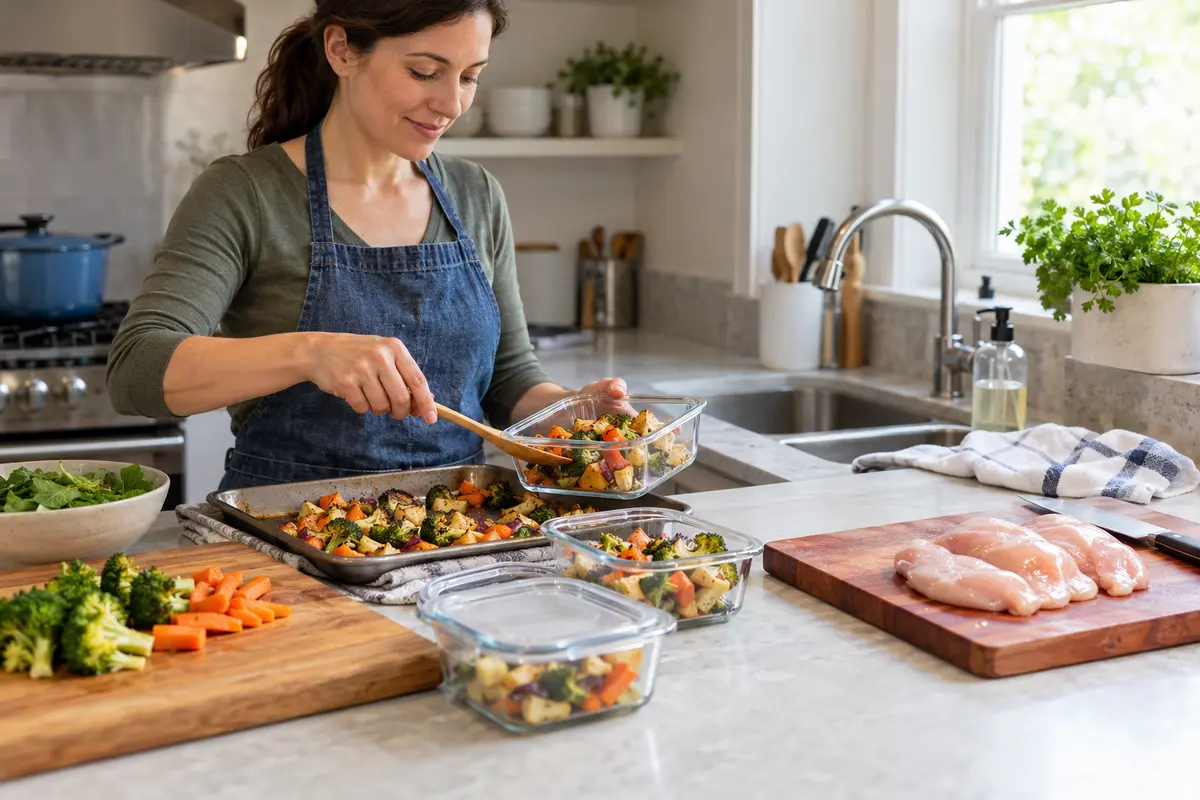
Ask when the food was cooked, how long it sat out, how it cooled, and how cold the refrigerator remained.
Look for package danger
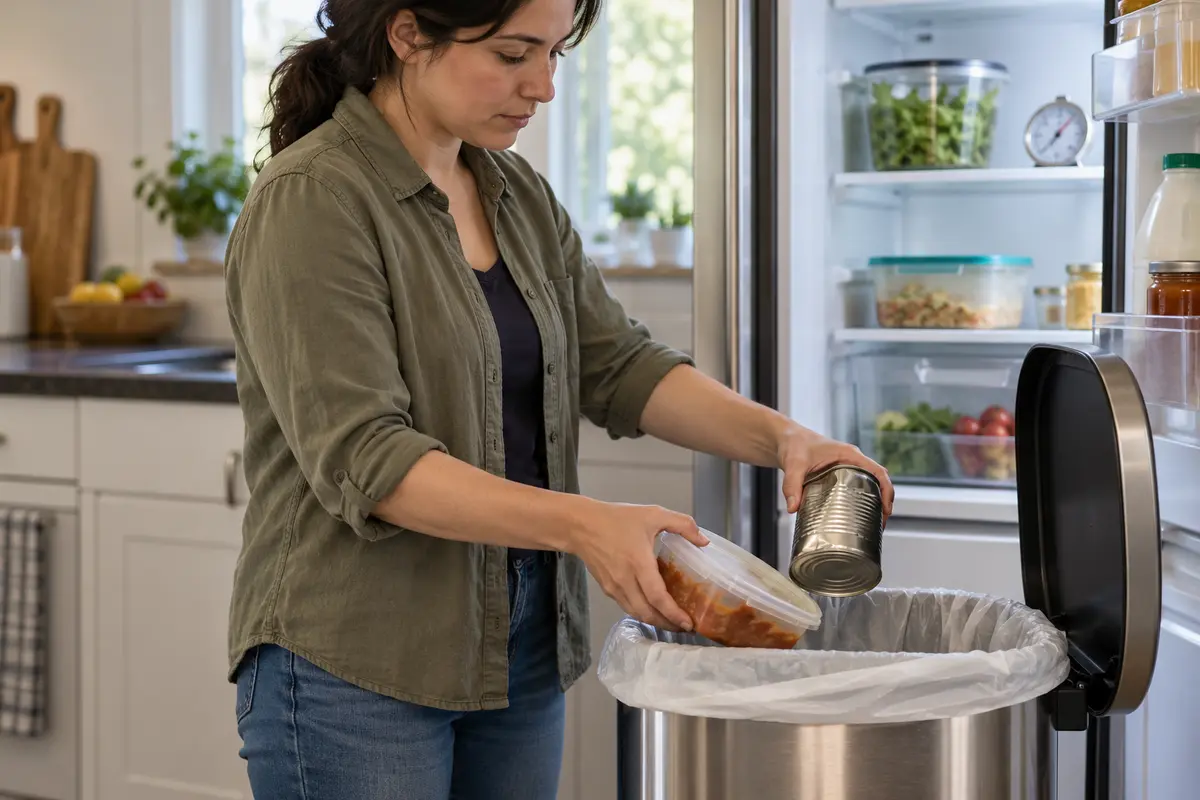
Discard bulging, leaking, spurting, severely damaged, or suspicious cans and jars without tasting.
Separate quality from safety
Freezer burn, dryness, or faded texture may be quality problems; unsafe time and temperature, mold where it can spread, or raw cross-contamination are safety problems.
Do not rely on senses
Dangerous bacteria may not change smell, taste, or appearance. A normal smell cannot overrule an unsafe timeline.
Discard without spreading
Contain leaking food, clean affected surfaces, wash hands, and do not feed questionable food to people or pets.
What good progress looks like
You can explain the handling fact that makes food acceptable or unsafe instead of relying on optimism, smell, or reheating.
Common mistakes and a useful response
Boiling does not reliably make every mishandled food safe because some toxins can remain. Cutting mold from soft, moist foods is not generally a safe rescue.
A small practice exercise
Review three hypothetical leftovers—properly chilled yesterday, left out overnight, and frozen promptly—and decide using timeline facts.
Keep the exercise small enough that you can pay attention. Repeating one controlled action teaches more than changing several variables in a complicated meal.