What you will learn
Season the food itself while leaving room for salty packaged ingredients and reduction. The goal is not merely to copy motions. You will learn why the sequence works, which clues matter, and what to change when your stove, pan, ingredient size, or timing differs.
Why it matters
Beginners are often given short instructions without the decisions behind them. This lesson turns the vague parts into actions you can observe and repeat, so an ordinary variation does not force you to guess.
What you need
Salt in a pinch bowl, clean tasting spoons, and the food being cooked.
Before you start
Identify salty ingredients such as stock, cheese, cured meat, canned food, soy sauce, and seasoning blends before adding separate salt.
Start lightly
Add a modest amount during an early cooking stage when it helps flavor penetrate, but keep part in reserve.
Stir and wait
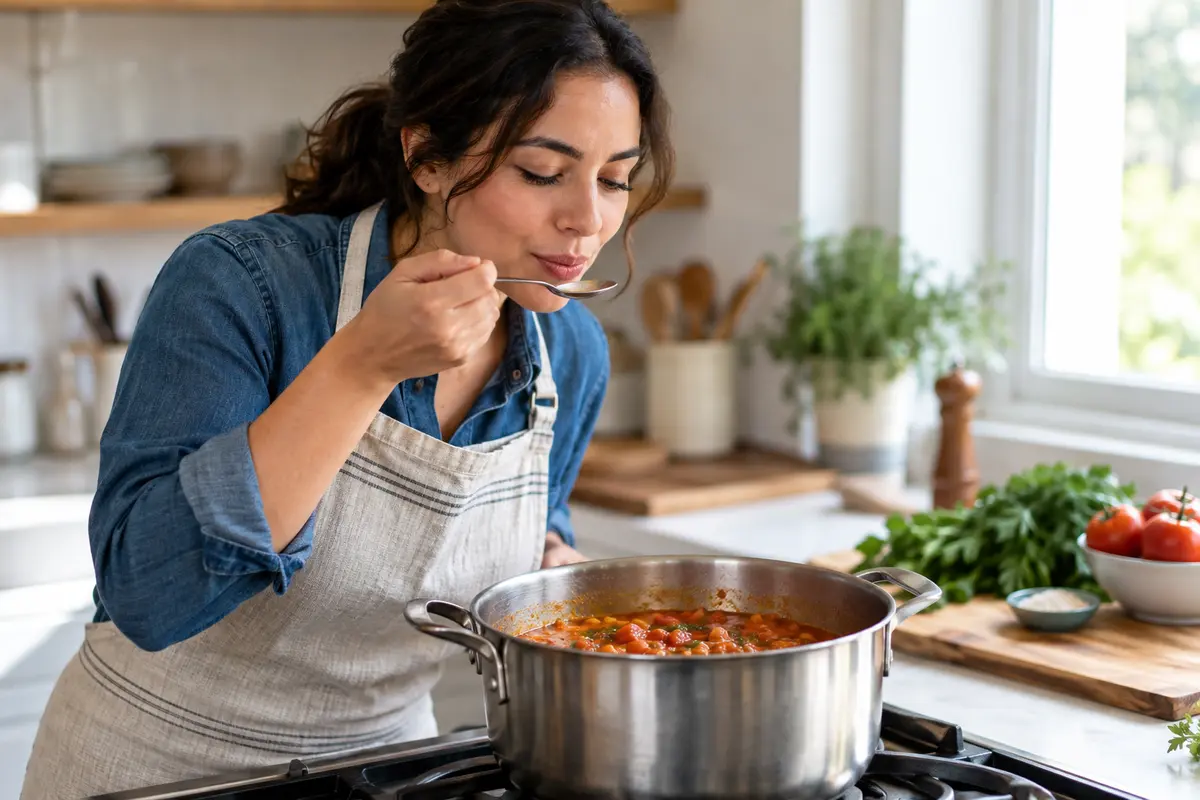
Salt must dissolve and move through the food. Taste immediately only after mixing well and allowing hot food to cool on a clean spoon.
Taste components together
A sauce may seem slightly mild alone but become balanced with salted pasta or cheese. Sample the combined bite when safe.
Adjust in pinches
Add a small pinch, stir, and taste again. Switching to a shaker over the pot makes the amount harder to control.
Finish with restraint
Stop when flavors become clearer, before the food tastes distinctly salty. Reduction and serving temperature can change perception.
What good progress looks like
Individual flavors become more distinct and the dish tastes complete without salt becoming the first thing you notice.
Common mistakes and a useful response
Adding most salt at the end seasons only the surface; adding the full amount before salty stock reduces can overshoot. Acid changes perception but does not remove sodium.
A small practice exercise
Divide a cooked unsalted vegetable into three portions and season with zero, one small pinch, and two. Taste side by side.
Keep the exercise small enough that you can pay attention. Repeating one controlled action teaches more than changing several variables in a complicated meal.