What you will learn
Use the refrigerator, cold water, or microwave instead of leaving perishables on the counter. The goal is not merely to copy motions. You will learn why the sequence works, which clues matter, and what to change when your stove, pan, ingredient size, or timing differs.
Why it matters
Beginners are often given short instructions without the decisions behind them. This lesson turns the vague parts into actions you can observe and repeat, so an ordinary variation does not force you to guess.
What you need
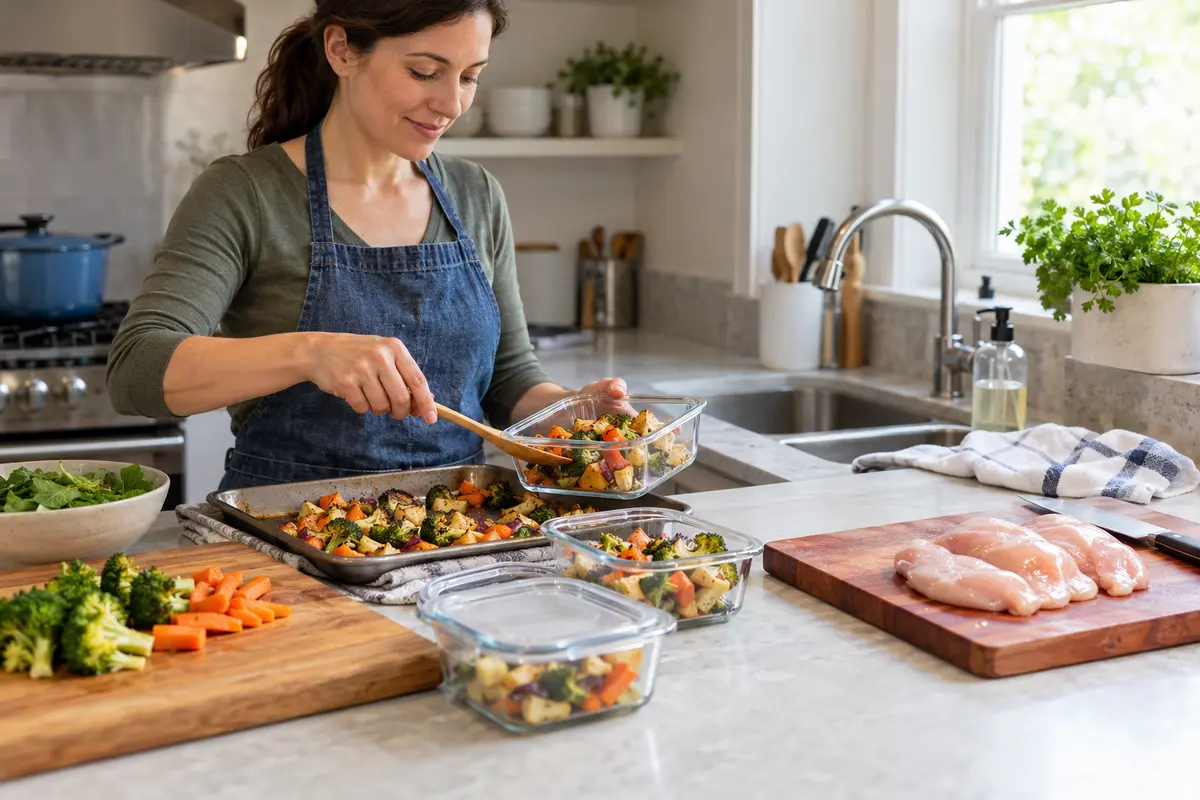
Leakproof container, refrigerator space, cold water if needed, or microwave.
Before you start
Plan by thickness: a large roast or frozen casserole may need more than one day in the refrigerator. Keep raw-food drips below ready-to-eat foods.
Prefer the refrigerator
Place food in a tray on a low shelf and allow steady cold thawing. This offers the most flexibility if plans change.
Use cold water for speed
Seal food in a leakproof bag, submerge in cold water, and change the water about every 30 minutes. Cook immediately afterward.
Microwave only when cooking next
Use the defrost setting, rotate as directed, and cook immediately because some areas begin warming or cooking.
Cook from frozen when approved
Some packaged foods and small items can cook safely from frozen; follow the product or tested recipe instructions and expect longer time.
Never trust the counter
The surface of a large food can enter unsafe temperatures while the center remains frozen.
What good progress looks like
Food stays at refrigerator temperature or in actively cold water, drips are contained, and cooking follows immediately after rapid thawing methods.
Common mistakes and a useful response
Warm water and countertops are not safe shortcuts. Refreezing rules depend on the thawing method and food condition; consult current USDA guidance.
A small practice exercise
Put a frozen container in the refrigerator and record how long the center takes to soften enough for reheating.
Keep the exercise small enough that you can pay attention. Repeating one controlled action teaches more than changing several variables in a complicated meal.