What you will learn
Distinguish a forming crust from a pan, heat, moisture, or coating problem. The goal is not merely to copy motions. You will learn why the sequence works, which clues matter, and what to change when your stove, pan, ingredient size, or timing differs.
Why it matters
Beginners are often given short instructions without the decisions behind them. This lesson turns the vague parts into actions you can observe and repeat, so an ordinary variation does not force you to guess.
What you need
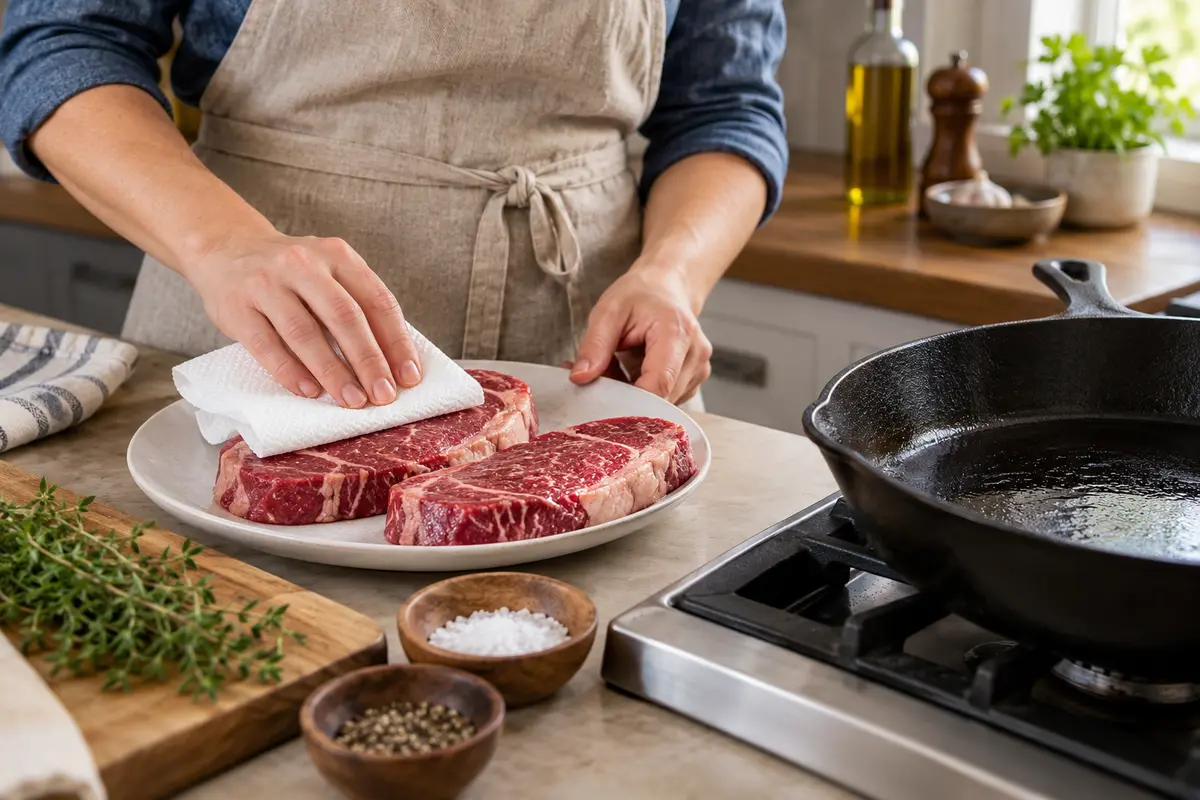
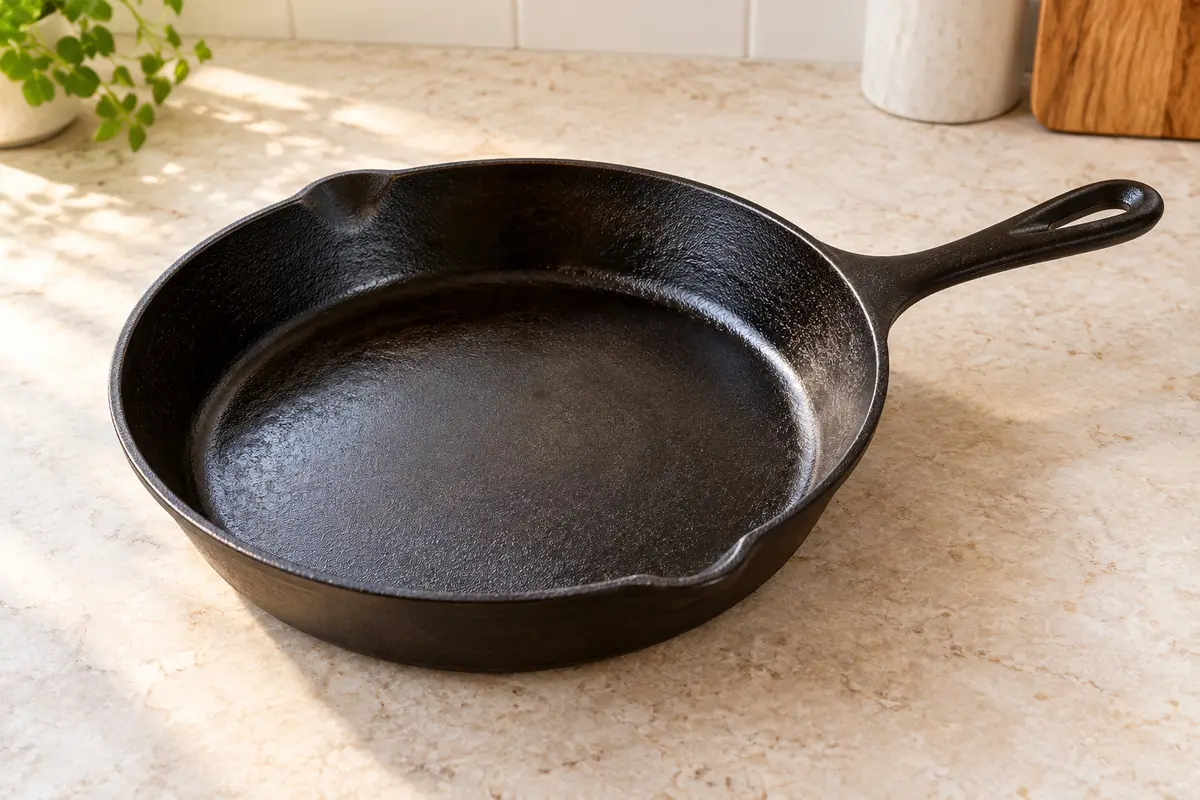
Suitable skillet, spatula or tongs, cooking fat, and dry food.
Before you start
Use cookware in good condition and follow nonstick care guidance. Dry food surfaces and preheat moderately before adding fat.
Check the setup
A cold pan, insufficient fat, wet food, or damaged coating can all cause sticking. Correct what you can before food enters.
Leave contact alone
Protein and starchy food often cling initially, then release more easily as a browned surface forms.
Test one edge
Slide a thin spatula under a corner or nudge gently with tongs. If resistance is strong and browning is not excessive, wait.
Control excessive heat
If the underside is burning before release, lower heat and carefully add a little appropriate fat around the edge.
Deglaze after removal
For stainless steel, browned bits left behind can become sauce. Black burned residue should not be scraped into food.
What good progress looks like
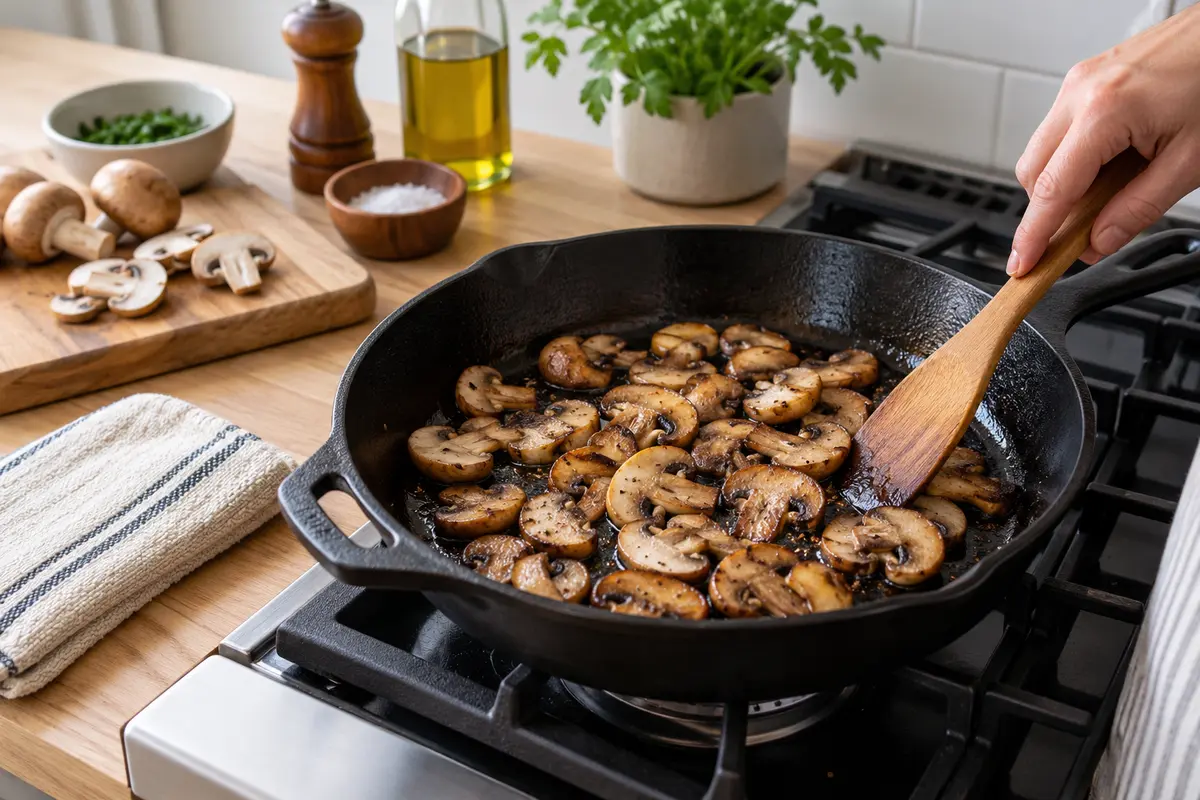
The food releases with gentle pressure once a crust forms, leaving brown fond rather than a torn surface or black residue.
Common mistakes and a useful response
Forcing a spatula early tears fish and meat. Pouring lots of cold oil into a very hot pan can splatter and does not fix badly burned food.
A small practice exercise
Sear two mushroom slices, trying to move one immediately and leaving the other until it releases. Compare their surfaces.
Keep the exercise small enough that you can pay attention. Repeating one controlled action teaches more than changing several variables in a complicated meal.