What you will learn
Lower the energy reaching the surface and give the center time—without pretending unsafe food is done. The goal is not merely to copy motions. You will learn why the sequence works, which clues matter, and what to change when your stove, pan, ingredient size, or timing differs.
Why it matters
Beginners are often given short instructions without the decisions behind them. This lesson turns the vague parts into actions you can observe and repeat, so an ordinary variation does not force you to guess.
What you need
Thermometer, oven-safe pan when appropriate, foil or lid, and clean plate.
Before you start
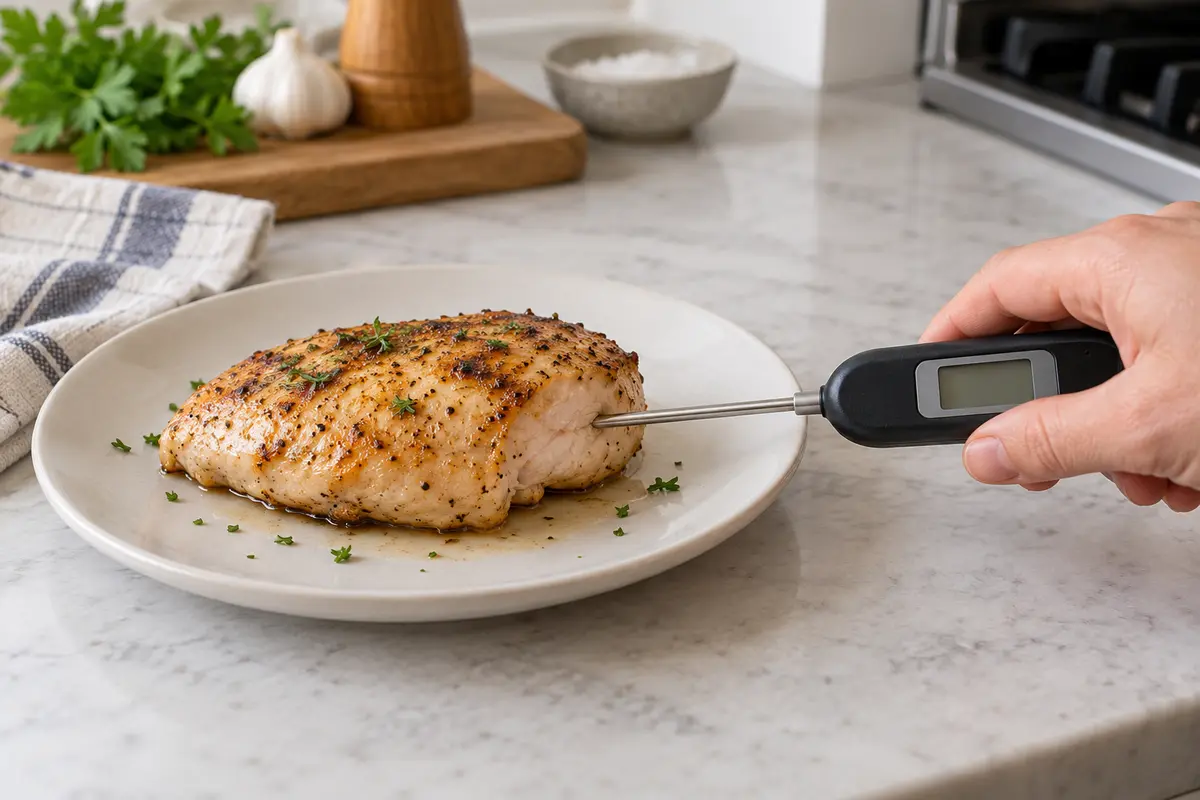
If meat or poultry is involved, measure the center. Do not taste undercooked food or serve it based on exterior color.
Stop the surface damage
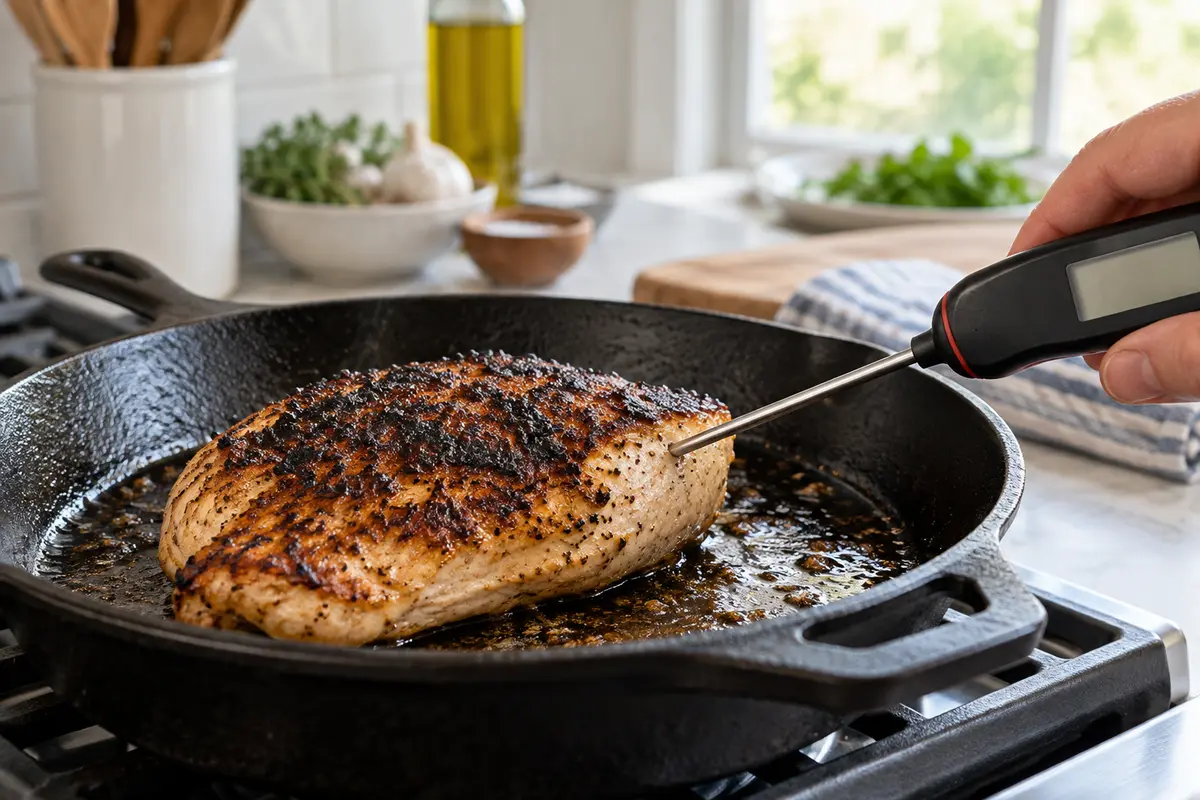
Lower the burner or move the pan off heat. Transfer from a blackened pan if burned residue is spreading bitterness.
Assess thickness
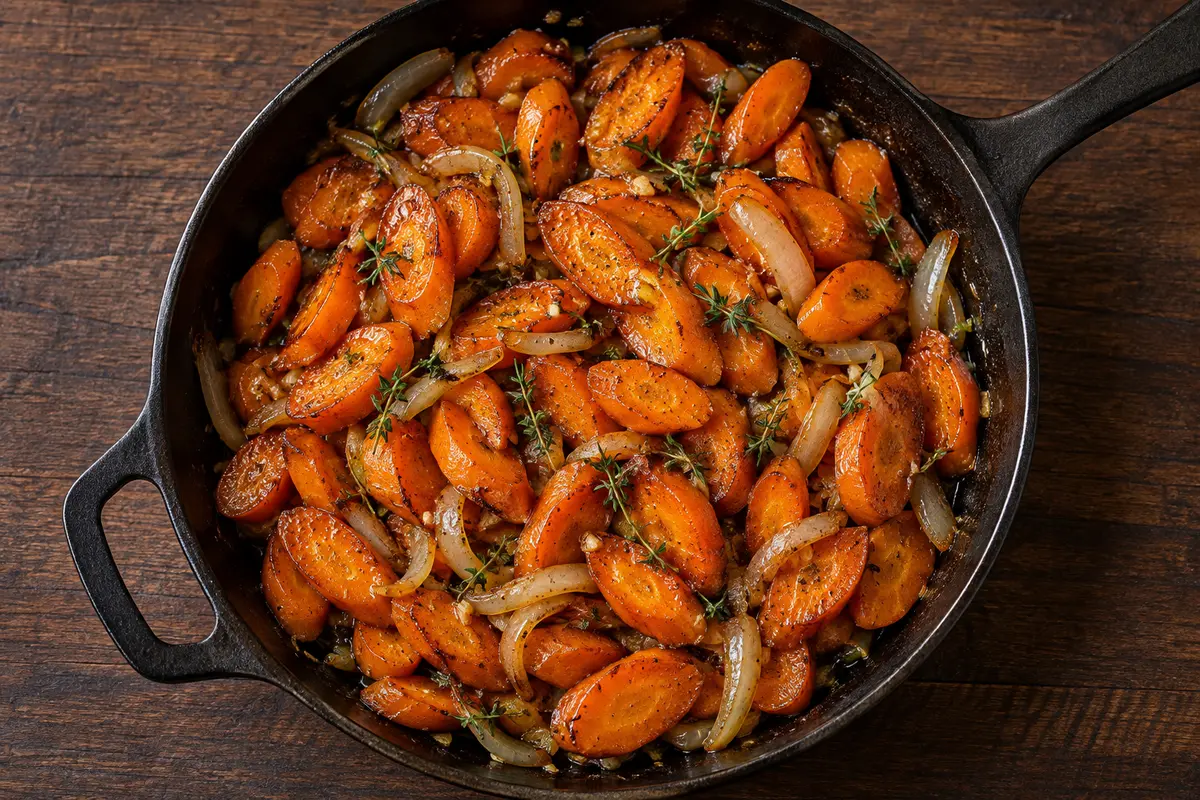
A thick piece may need gentler oven heat, a lid, or smaller portions next time. Dense vegetables can use brief covered steaming.
Finish with indirect heat
When the cookware and recipe allow, move the item to a moderate oven so heat reaches the center more gradually.
Measure the center
Check the thickest part and continue until the food-specific safe temperature is reached. Burned outside does not lower the safety target.
Improve the next batch
Even thickness, moderate preheat, and an earlier turn prevent the same mismatch better than a last-minute rescue.
What good progress looks like
Surface darkening slows while the center temperature rises steadily. The food reaches its required safe temperature before serving.
Common mistakes and a useful response
Scraping off black areas does not make an undercooked center safe. Covering indefinitely can turn the surface soggy and still needs temperature verification.
A small practice exercise
Cook two thick potato slices, one over high heat and one over medium-low, and compare center tenderness when the surfaces match in color.
Keep the exercise small enough that you can pay attention. Repeating one controlled action teaches more than changing several variables in a complicated meal.