What you will learn
Control foam, starch, and headspace before they flood the stovetop. The goal is not merely to copy motions. You will learn why the sequence works, which clues matter, and what to change when your stove, pan, ingredient size, or timing differs.
Why it matters
Beginners are often given short instructions without the decisions behind them. This lesson turns the vague parts into actions you can observe and repeat, so an ordinary variation does not force you to guess.
What you need
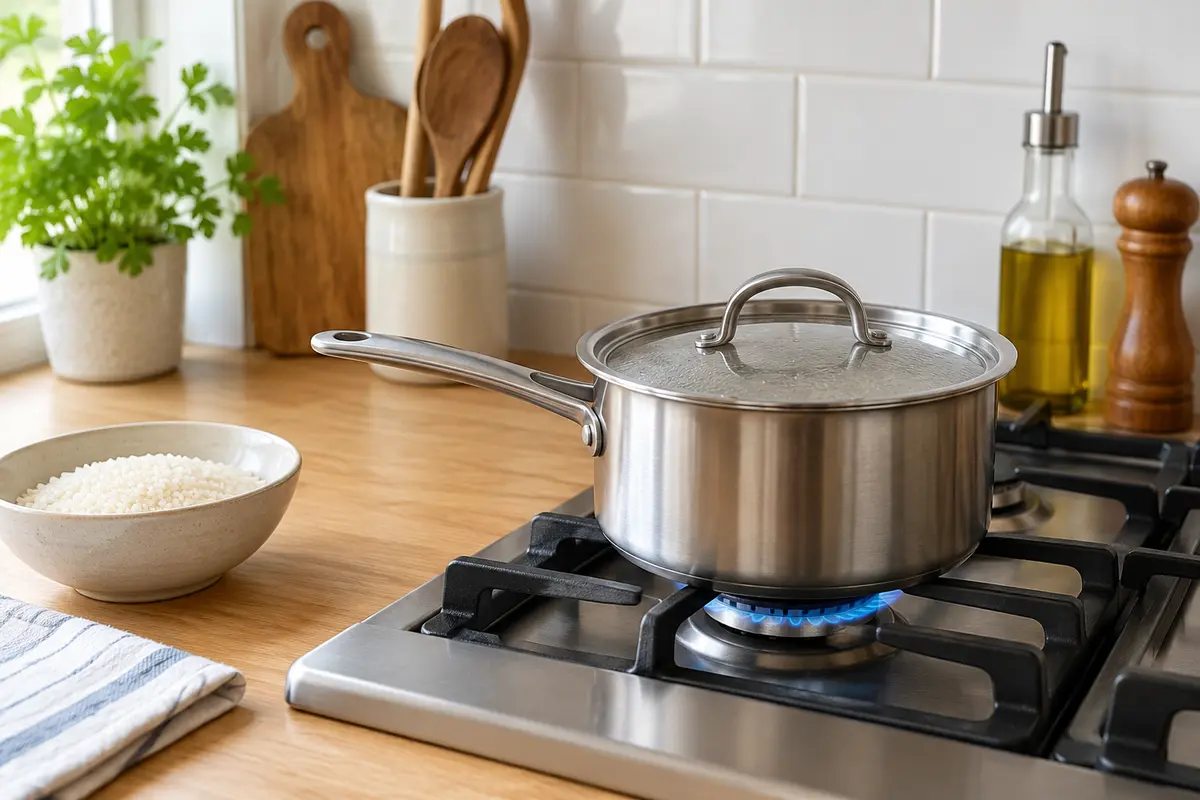
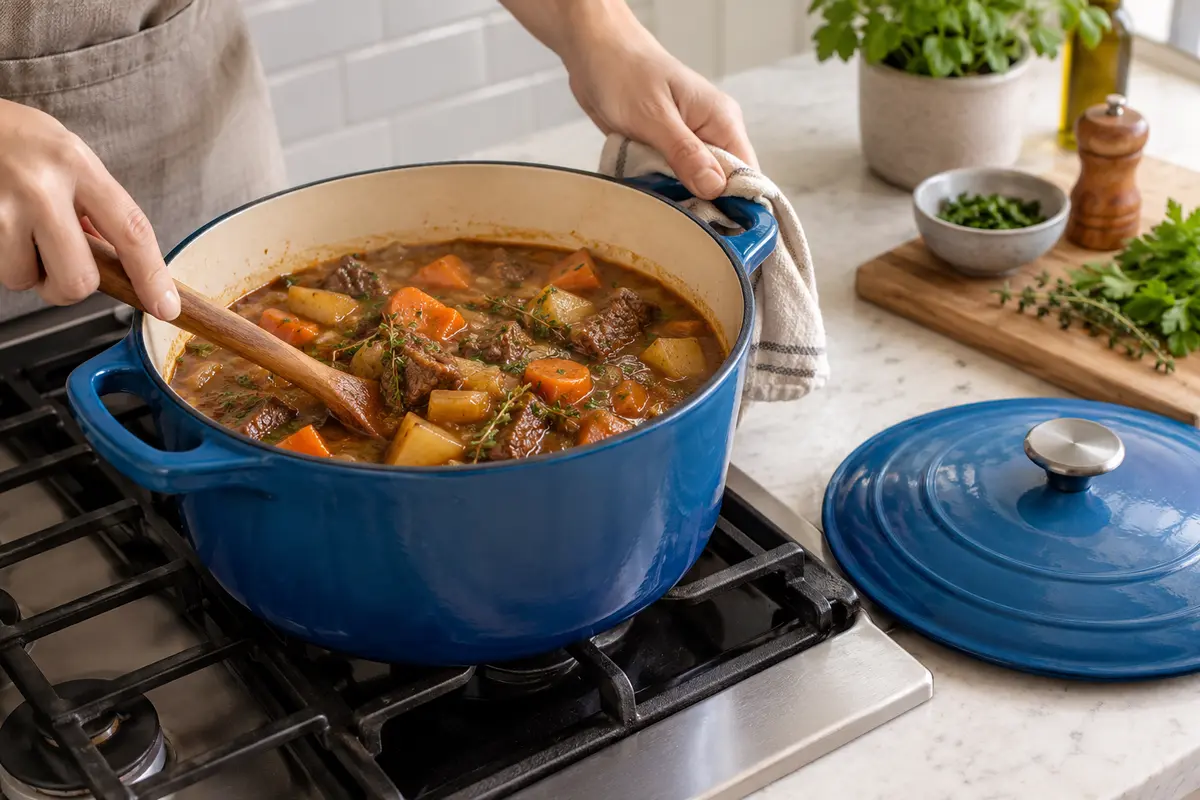
A pot larger than the contents, a long spoon, and an accessible burner control.
Before you start
Use a clean stovetop and keep handles away from the edge. Never try to carry a pot that is actively boiling over.
Leave headroom
Choose a pot that will not be nearly full after water and food are added. Pasta, milk, beans, and starchy grains can create persistent foam.
Stay for the climb
Remain close as the liquid approaches boiling. The change from calm to overflowing can happen in seconds.
Lower the heat early
Once boiling is established, reduce to the level the recipe needs. A larger flame does not make boiling water hotter under ordinary kitchen conditions.
Vent the lid
A covered pot reaches boiling sooner. Remove or crack the lid when the method allows, keeping your face and hands away from escaping steam.
Respond safely
If foam rises, turn off or lower the burner and slide the pot off heat if you can do so safely. Stir only after the surge subsides.
What good progress looks like
There is visible empty space above the liquid, foam rises and falls below the rim, and the boil continues at the gentlest level that does the job.
Common mistakes and a useful response
A wooden spoon across the pot is not a reliable unattended safety device. Oil added to pasta water does not solve excessive foam and can hinder sauce adhesion.
A small practice exercise
Bring a half pot of water to a boil with the lid on, then practice uncovering and reducing the heat before the bubbles climb.
Keep the exercise small enough that you can pay attention. Repeating one controlled action teaches more than changing several variables in a complicated meal.