What you will learn
Find the hidden prep, resting, thawing, and waiting time before it surprises you. The goal is not merely to copy motions. You will learn why the sequence works, which clues matter, and what to change when your stove, pan, ingredient size, or timing differs.
Why it matters
Beginners are often given short instructions without the decisions behind them. This lesson turns the vague parts into actions you can observe and repeat, so an ordinary variation does not force you to guess.
What you need
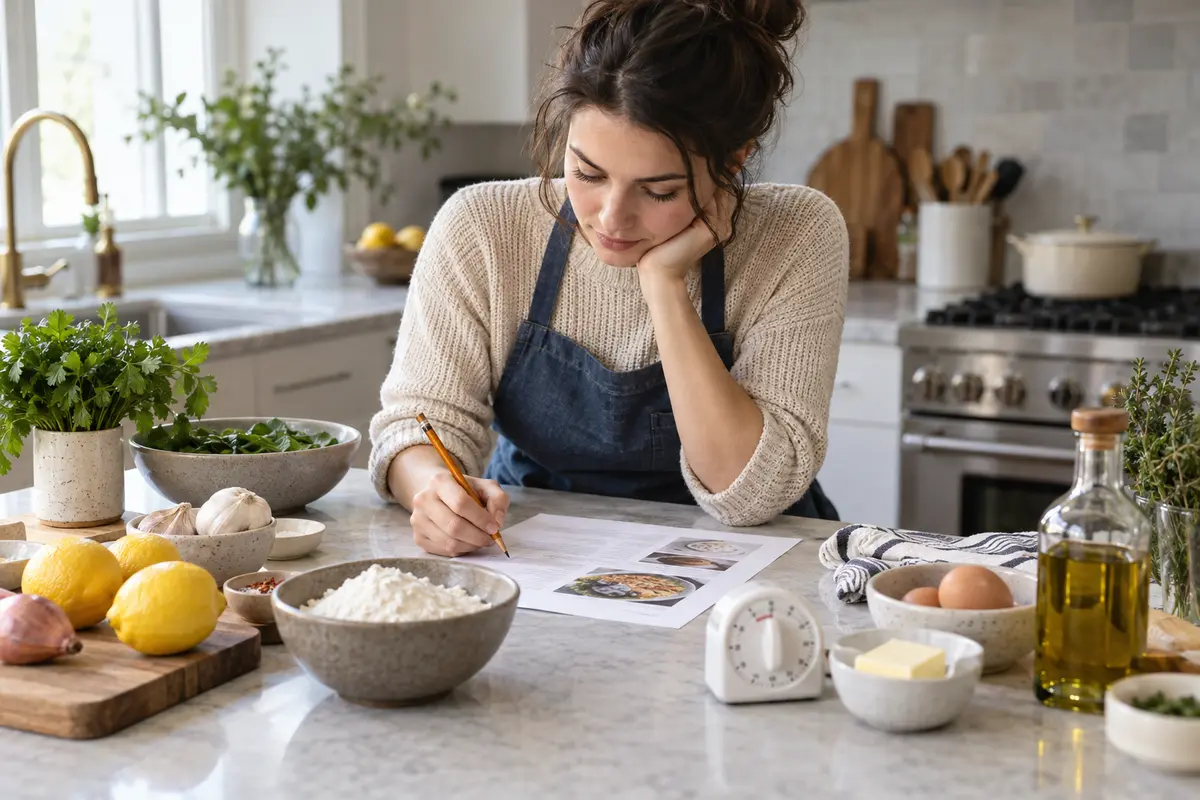
The recipe, a pencil or phone note, and a clock.
Before you start
Read the entire ingredient list and method once without touching the stove. Check whether ingredients must be thawed, softened, chilled, divided, or already cooked.
Find the true finish time
Add preparation, cooking, resting, cooling, and any unattended waiting. A 30-minute bake may still require an hour if the oven must preheat and the food must cool before slicing.
Mark ingredient states
Circle words such as diced, melted, room temperature, drained, or divided. They describe work that may happen before the numbered method begins.
Match ingredients to steps
Notice where each ingredient is used and whether one amount is split. Put a small mark beside anything added in two different places.
Spot decision points
Underline cues such as golden, tender, or gently bubbling. These observations matter more than treating the printed minute as a guarantee.
Build a short plan
Write the first three actions in order: perhaps thaw, preheat, then chop. Keep the recipe open and return to it before each major stage.
What good progress looks like
You should know what happens first, what can wait, and approximately when the meal will be ready. Nothing important should appear for the first time while a pan is already hot.
Common mistakes and a useful response
Starting from the title and improvising from memory causes most timing surprises. Another trap is overlooking the word divided and adding the entire amount at once.
A small practice exercise
Choose one short recipe on the site. Make a five-line timeline without cooking it, then compare your timeline with the method.
Keep the exercise small enough that you can pay attention. Repeating one controlled action teaches more than changing several variables in a complicated meal.